
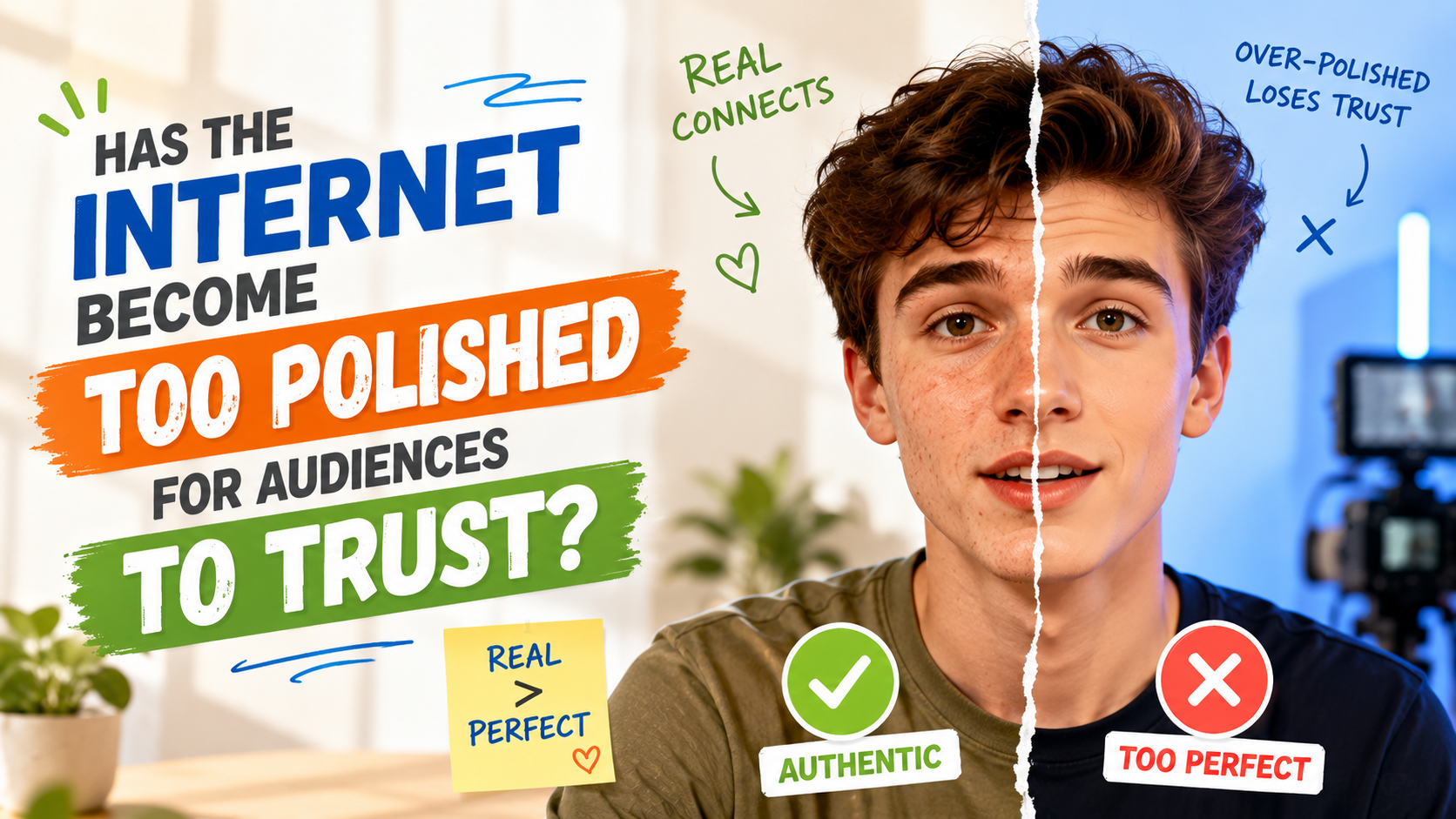
For years, creators across YouTube, Instagram, and other digital platforms were told the same thing: improve production quality. Better cameras, cleaner edits, cinematic lighting, advanced motion graphics, sharper thumbnails, faster pacing, tighter scripting — professionalism became the standard creators chased constantly.
And for a long time, it worked. Highly polished content signalled effort, ambition, authority, and credibility. As the creator economy became more competitive, audiences also became visually conditioned to expect a certain level of refinement from creators they followed regularly. What once looked premium eventually became normal.
But something unusual is starting to happen in 2026. Despite the internet becoming more visually advanced than ever before, audiences are increasingly showing signs of emotional fatigue toward overly polished content. In some cases, highly engineered videos are beginning to feel less relatable, less trustworthy, and strangely less memorable — even when they are technically excellent. This shift is subtle, but it reflects a much larger change happening inside digital culture right now.
How AI Content Is Changing Audience Perception of Authenticity
The rise of AI-generated content has accelerated this emotional shift dramatically. Audiences now regularly encounter AI voices, synthetic visuals, automated storytelling, cloned personalities, and highly processed content formats without always knowing what is real, edited, assisted, or entirely artificial. Even when creators are authentic, viewers increasingly consume content inside an environment where artificiality is constantly present.
This creates a psychological side effect. Viewers start looking for “human signals” more actively. Imperfections, pauses, spontaneous reactions, rough edges, unscripted moments, emotional inconsistency, natural speech patterns, and less controlled environments can suddenly feel more believable than a perfectly polished presentation. In many ways, audiences are no longer evaluating content only for quality. They are evaluating it for perceived sincerity. That is a very different internet than the one creators were optimising for five years ago.
Why Raw and Unfiltered Content Is Quietly Returning
One of the clearest signs of this shift is the growing popularity of formats that feel less manufactured. Long-form conversations, minimally edited podcasts, behind-the-scenes footage, direct-to-camera storytelling, imperfect vlogs, casual livestreams, and slower unscripted content are continuing to hold audience attention in ways that highly edited formats sometimes struggle to replicate emotionally.
What makes this interesting is that viewers often describe these formats as “more real,” even when they are still strategically produced. This suggests that authenticity itself is slowly becoming a visual language online. Creators are beginning to understand that relatability is not just about personality anymore. It is also about presentation style. Overly commercial aesthetics, excessively clean storytelling, and constant optimisation can unintentionally create emotional distance between creator and audience.
Meanwhile, slightly imperfect content can sometimes create a stronger sense of trust because it feels less filtered through performance strategy. In a digital ecosystem dominated by algorithms and AI assistance, visible humanity itself is becoming part of audience appeal.
Why “Professionalism” Is Being Redefined in the Creator Economy
For years, professionalism in digital content was associated primarily with technical quality. Better equipment and smoother production were viewed as clear indicators of creator growth. But the definition of professionalism is evolving. Today, some of the most effective creators are not necessarily the ones producing the most polished content. They are the ones balancing quality with emotional accessibility. They understand when polish strengthens communication and when it starts weakening authenticity.
This balance is becoming increasingly important because audiences are more media-aware than ever before. Viewers understand editing techniques. They recognise storytelling structures. They identify engagement tactics. Many audiences now consume content with an underlying awareness that they are constantly being optimised for. That awareness changes audience psychology. Content no longer competes only on production quality. It competes on emotional credibility. And in an internet increasingly shaped by AI-generated media, emotional credibility may become one of the hardest things to automate successfully.
The Future of Creator Trust May Depend on Human Presence
The creator economy is not moving backwards. High-quality production will continue to matter. Strong editing, thoughtful storytelling, and visual refinement will always remain valuable. But audiences may no longer respond to polish in the same way they once did.
As digital content becomes more technically perfect, creators may face a new challenge: proving there is still a real person behind the content. Not just a system designed to maximise watch time, but an actual perspective, personality, and human presence audiences can connect with meaningfully. Because in 2026, viewers are not only asking whether content looks good. They are increasingly asking whether it feels real.
How Ping Network Can Help
At PING Network, we closely track how audience behaviour, platform trends, and creator strategies are evolving across YouTube and the wider creator economy. As content ecosystems become more AI-assisted and algorithm-driven, understanding what builds long-term audience trust is becoming just as important as understanding what drives reach.