For years, the creator economy operated on a relatively simple assumption: audiences followed creators because they believed there was a real person behind the content. That sense of authenticity shaped almost every part of the industry. It influenced how communities formed, how trust was built, how products were sold, and even how platforms rewarded creators algorithmically. The relationship between audiences and creators often felt personal, even at scale. But in 2026, that foundation is beginning to change faster than many people expected.
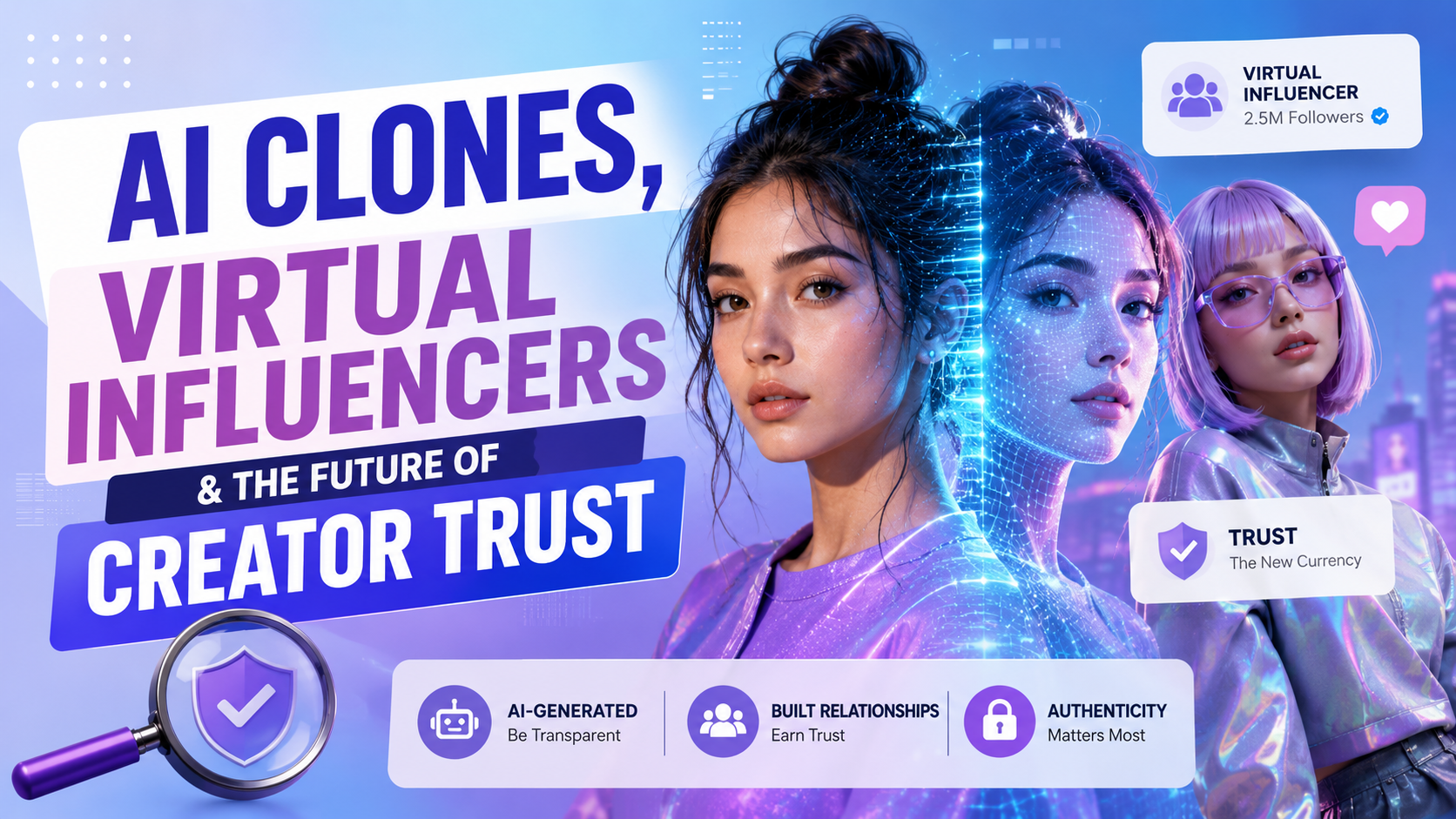
AI-generated creators are becoming increasingly sophisticated. Virtual influencers are attracting real audiences and brand partnerships. Deepfake technology is becoming easier to access, cheaper to produce, and far more convincing than earlier versions of synthetic media. At the same time, audiences are entering an internet environment where distinguishing between human creators, AI-assisted creators, and fully synthetic digital personalities is becoming increasingly difficult. The creator economy is no longer only dealing with questions around content quality or monetisation. It is beginning to deal with questions around trust itself.
Why AI-Generated Creators Are Expanding So Quickly Across Digital Platforms
One of the reasons AI-generated creators are growing rapidly is that they align extremely well with how modern platforms distribute content. Today’s recommendation systems reward speed, consistency, adaptability, and constant output. AI-generated creators naturally fit that environment because they can produce content continuously without many of the limitations human creators face. They can scale across languages faster, adapt to trends almost instantly, and maintain highly consistent publishing patterns. That scalability matters because the modern content ecosystem increasingly rewards volume and responsiveness.
In many cases, audiences may not even fully realise how much AI is already influencing the creator ecosystem. Some virtual influencers openly present themselves as artificial personalities, while other creators use AI more subtly through cloned voices, AI-assisted scripting, synthetic avatars, or digitally generated content enhancement. The distinction between “AI-assisted creator” and “AI-generated creator” is already blurring. And that blur may become one of the defining characteristics of the next phase of digital media.
Why Deepfakes and AI Clones Are Creating a New Kind of Digital Risk
The more complicated side of this shift is not simply AI-generated content itself, but the growing ability to replicate real creators digitally. For most of internet history, a creator’s identity was relatively difficult to duplicate at scale. Someone could copy-editing styles or imitate content formats, but replicating a creator’s actual voice, appearance, personality, or communication style convincingly required significant effort.
AI changes that completely. Today, publicly available videos can provide enough material for systems capable of generating synthetic versions of creators that sound realistic enough to confuse audiences. As these tools improve, creators are no longer only protecting their content libraries — they are increasingly protecting their identity itself.
That creates an entirely new category of digital risk. A manipulated clip, fake endorsement, synthetic controversy, or AI-generated impersonation no longer requires sophisticated studio-level production. In many cases, it can be created quickly using consumer-accessible tools. The challenge is not just that the content exists, but that synthetic media spreads faster than audiences can verify its authenticity. This creates a difficult environment not only for creators but also for platforms and advertisers trying to maintain audience trust.
Why Authenticity May Become More Valuable in the AI Era
Ironically, the rise of AI-generated creators may end up increasing the value of creators who feel genuinely human. Over the last several years, much of creator culture became heavily optimised around platform performance. Faster editing, algorithm-friendly pacing, repeated hooks, emotional exaggeration, and highly standardised content structures became increasingly common because they performed well inside recommendation systems.
But as AI becomes capable of reproducing many of those same patterns automatically, audiences may begin valuing qualities that feel harder to automate. Human inconsistency, personal perspective, lived experience, emotional nuance, and long-term audience familiarity may become increasingly important differentiators in a digital ecosystem filled with synthetic content.
This is especially significant in creator categories where credibility matters more than passive entertainment. Podcasts, educational channels, commentary creators, wellness creators, interview formats, and community-driven ecosystems depend heavily on audience trust over long periods of time. In these spaces, audiences are not simply consuming content. They are evaluating intent, personality, consistency, and credibility. And those forms of trust are far more difficult to manufacture artificially.
Why Brands Are Becoming More Cautious About AI Influencers
Brands are also entering unfamiliar territory as AI-generated creators become more common. On the surface, virtual influencers appear highly attractive from a business perspective. They are scalable, controllable, cost-efficient, and operationally predictable. Unlike human creators, they do not face scheduling limitations, burnout, reputational unpredictability, or inconsistent output.
But advertising operates on trust just as much as visibility. And that creates uncertainty around AI-generated personalities. A virtual influencer may generate engagement, but brands still do not fully understand whether synthetic creators can build the same depth of audience trust that human creators can develop over time. The challenge becomes even more complicated when audiences are unclear about how much of a creator’s identity is authentic, assisted, or entirely artificial. As a result, many advertisers are beginning to think more carefully about disclosure, creator transparency, and long-term brand credibility in AI-driven content environments.
The conversation is slowly moving away from:
“Can AI creators attract attention?”
towards:
“What kind of trust can synthetic creators actually sustain?”
That distinction may become increasingly important as AI content becomes more common across platforms.
Why Creator Identity May Become One of the Most Valuable Digital Assets
For years, creators focused primarily on protecting content ownership. But in an AI-driven ecosystem, identity itself may become equally important. Because while content can now be replicated quickly, long-term audience trust remains much harder to reproduce artificially. A creator’s credibility, audience familiarity, communication style, and emotional relationship with viewers may ultimately become more valuable than the content formats themselves.
This is one of the reasons the creator economy is entering a much deeper conversation around authenticity, disclosure, digital rights, and identity protection. The internet is moving towards an environment where synthetic media will become increasingly normal. And as that happens, audiences may begin placing greater value on creators they genuinely believe.
The Bigger Trust Shift Happening Across the Creator Economy
The discussion around AI in the creator industry is often framed around automation, efficiency, and scalability. But the deeper shift may actually revolve around trust.
Platforms can optimise distribution.
AI can optimise production.
Algorithms can optimise engagement.
But trust is built much more slowly.
And in a digital ecosystem increasingly filled with synthetic personalities, manipulated content, and AI-generated media, that trust may become one of the most important competitive advantages human creators still hold.
Understanding the Future of AI, Digital Identity, and Creator Ecosystems
At Ping Network, we closely track how AI-generated content, platform policy changes, creator rights, and digital identity are reshaping the creator economy. From YouTube strategy and CMS management to content protection, monetisation support, and rights management, we help creators and media businesses build sustainable systems for an increasingly complex digital ecosystem.