The Biggest Damage Often Happens After the Demonetisation Email
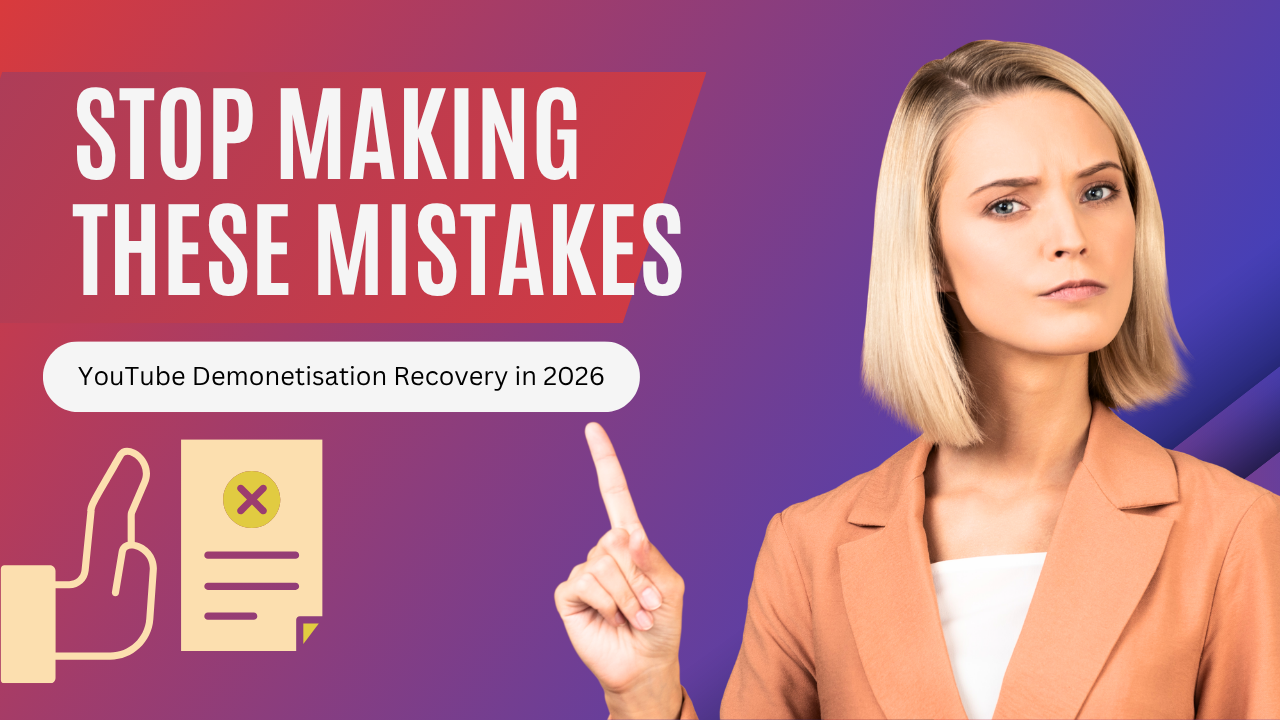
For most creators, demonetisation starts with shock. One email suddenly changes the entire direction of the channel. Revenue stops, sponsorship conversations become uncertain, upload confidence drops, and panic immediately takes over. And in that panic, many creators start making rushed decisions before properly understanding what the platform may actually be reviewing.
Ironically, this phase is where many channels create even bigger problems for themselves. Because demonetisation recovery today is rarely just about one appeal form. It is often about how a creator responds operationally after the rejection itself. And that difference matters far more in 2026 than it did a few years ago.
Why Panic Cleaning a Channel Usually Creates More Confusion Than Clarity
One of the most common reactions after demonetisation is mass deletion. Creators suddenly start deleting dozens, sometimes hundreds of uploads, overnight. Older videos disappear, thumbnails change randomly, titles are rewritten aggressively, and entire content categories get wiped out without any structured review process behind the decisions.
From the creator’s perspective, this feels proactive. But in reality, panic-cleaning often creates a messy channel structure rather than a strategic recovery path. Because not every risky-looking video is necessarily the real issue. And not every video needs deletion either. Sometimes, privatising content is more appropriate. Sometimes metadata is the bigger concern. Sometimes repeated framing styles across thumbnails and titles create stronger advertiser concerns than the topic itself. The problem is that many creators react emotionally instead of analytically. And once panic takes over, channels often lose clarity about what they are actually trying to fix.
Why Public Frustration Rarely Helps During Monetisation Recovery
Another major mistake creators make is turning the recovery process into a public battle against YouTube. Frustration posts, angry livestreams, emotional community updates, and “YouTube is targeting me” narratives have become increasingly common after demonetisation. While the frustration may feel genuine, these reactions usually do very little to improve the actual recovery process itself. Because platform reviews are not driven by public sympathy. In fact, creators sometimes become so focused on proving the platform wrong that they stop objectively reviewing whether certain parts of their own content structure may genuinely be creating advertiser concerns.
And that is a dangerous blind spot. The goal during recovery is not to win an emotional argument against the platform. The goal is to understand how the channel may currently be perceived and whether that perception can realistically change over time. Those are two completely different mindsets.
Why Many Creators Misunderstand What YouTube Wants to See During a Recovery
A common misconception is that demonetisation recovery depends entirely on writing the “perfect appeal.” But increasingly, the appeal itself appears to be only one small part of the larger picture. What matters more is whether the channel actually reflects meaningful corrective direction afterwards. If the same content packaging, same sensational framing, same controversial patterns, and same advertiser-sensitive presentation continue after rejection, the platform may see very little reason to reassess the channel differently.
This is why recovery often requires creators to slow down and review the channel more strategically. Not just recent uploads, but the overall ecosystem. Older community posts, repetitive thumbnails, misleading hooks, borderline metadata strategies, recycled formats, or excessive dependence on controversy can all contribute to how a channel is interpreted over time. Many creators focus only on what they upload, while ignoring how the entire channel “feels” from a platform-safety perspective. And that broader perception increasingly matters.
Why Experienced Guidance Is Becoming More Important During Monetisation Recovery
One of the biggest shifts happening in 2026 is that monetisation recovery is becoming more operational than emotional. Creators are slowly realising that channel audits, risk assessment, content positioning, archive review, and structured cleanup processes now play a significant role in long-term monetisation sustainability. And this is exactly where experienced ecosystem support often becomes valuable. Teams that work closely with platform systems, policy-sensitive categories, monetisation structures, and large channel ecosystems are usually able to identify risk patterns that creators themselves may overlook while operating too close to their own content every day. That does not mean anyone can guarantee monetisation approval. But it does mean creators increasingly benefit from having structured guidance instead of reacting entirely through panic, assumptions, or social media opinions.
As YouTube’s ecosystem becomes more policy-sensitive, creators are also beginning to understand why working with experienced YouTube ecosystem partners, certified networks, and operationally aware teams can sometimes make recovery processes far more organised than trying to navigate them blindly alone.
The Real Challenge Is Not Getting Monetised Again, It Is Staying Monetisable
The deeper issue behind demonetisation recovery is sustainability. Many creators focus entirely on getting monetisation restored, but far fewer ask whether their channel structure is stable enough to avoid repeating the same situation again six months later. Because in 2026, monetisation is no longer just connected to views or virality alone.
It is increasingly connected to consistency, advertiser trust, presentation quality, content positioning, and long-term platform confidence. And creators who fail to adapt to that reality often find themselves trapped in repeated cycles of warnings, restrictions, appeals, and uncertainty. Which is why the smartest creators today are no longer thinking only about how to grow faster. They are also thinking about how to build channels that remain sustainable under evolving platform standards over the long term.
As monetisation reviews become increasingly layered and operational, many creators are beginning to realise that recovery is no longer just about submitting an appeal form. Structured channel audits, content risk assessment, archive cleanup, and long-term monetisation positioning are becoming equally important parts of the process areas that experienced YouTube ecosystem teams and certified partners like Ping Network continue to work closely on across different categories of creators and publishers.