For a long time, the creator economy operated on the idea that content itself was the business.
If a creator understood the internet well enough, stayed consistent, and built audience attention, everything else would eventually follow — brand deals, monetisation, growth, and stability. In the earlier phases of the industry, that assumption often worked because the ecosystem itself was still relatively open. Platforms were rewarding experimentation, competition was lower, and creators were building audiences during a period when digital attention was expanding faster than the number of people trying to monetise it.
But the creator economy in 2026 no longer functions like an early-stage internet opportunity It behaves more like a structured media industry. That shift is important because it changes what actually determines long-term success online. Visibility still matters, but visibility alone is becoming increasingly unstable as a business model. Many creators today are discovering that audience growth and business stability are no longer automatically connected in the way they once appeared to be.
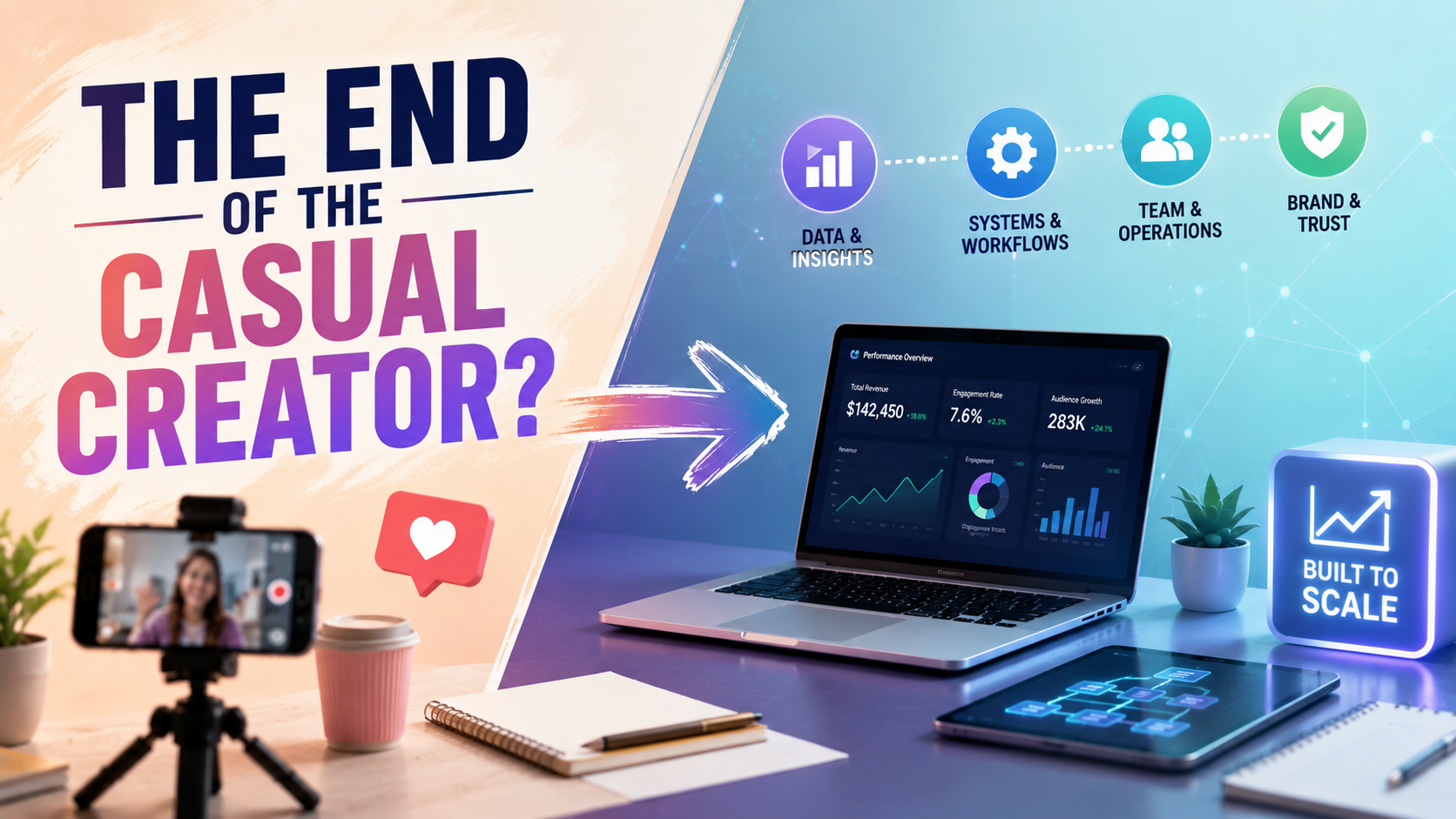
A creator may still generate millions of views while simultaneously dealing with unpredictable monetisation, platform restrictions, advertiser concerns, copyright complications, or declining audience loyalty. In many cases, the challenge is not a lack of reach. The challenge is that the ecosystem around digital content has become far more operational than most creators originally anticipated. The modern creator economy increasingly rewards creators who understand systems, not just content.
Why Audience Growth No Longer Guarantees Business Stability
One of the biggest changes happening across platforms is that internet attention has become easier to capture but significantly harder to retain. Short-form algorithms, AI-assisted content production, and trend-driven discovery systems have accelerated the speed at which creators can gain visibility. But they have also accelerated audience fatigue. Viewers are now exposed to such high volumes of content that attention itself has become fragmented. Audiences move faster between creators, formats, and trends than they did a few years ago. This creates a very different growth environment from the earlier creator economy.
Previously, building an audience often meant gradually building a stable digital community. Today, rapid visibility can happen without creating any meaningful long-term audience relationship at all. Many creators are experiencing situations where content performs well publicly while the business behind the content becomes increasingly unpredictable privately.
That instability affects everything:
sponsorship consistency,
repeat viewership,
advertiser confidence,
revenue forecasting,
and long-term content planning.
As a result, creators are beginning to realise that content performance alone is no longer enough to create sustainable digital businesses. The systems supporting the content now matter just as much as the content itself.
Why Brands Are Becoming More Selective About Creator Partnerships
The advertising industry has also become far more cautious about how it approaches creator marketing. During the earlier growth phases of influencer marketing, visibility metrics often dominated decision-making. Large follower counts, viral engagement, and short-term reach were enough to attract brand attention because the creator economy itself was still operating in a highly experimental phase. But as advertising budgets increased, brands also became more aware of the risks attached to digital creators.
Today, advertisers are evaluating creators differently because creator partnerships now directly influence brand reputation, consumer trust, and long-term marketing performance. A creator is no longer viewed simply as an individual with an audience. Increasingly, creators are being evaluated as business ecosystems with operational strengths and weaknesses.
This is why many brands now pay closer attention to audience quality, consistency, content behaviour, platform compliance history, controversy risk, and long-term audience trust rather than relying only on visibility metrics.
The industry is slowly moving away from asking:
“How many people watched this creator?”
and towards asking:
“How stable and reliable is this creator’s ecosystem?”
That shift changes the economics of the creator economy entirely.
Why Platform Complexity Is Forcing Creators to Build Infrastructure
At the same time, platforms themselves are becoming significantly more complex to operate within. Monetisation systems evolve constantly. Discovery algorithms change more aggressively. AI-generated content policies are expanding. Copyright enforcement systems are becoming increasingly automated. Advertising markets fluctuate faster across different regions and content categories.
For creators, this means the business side of digital content now requires far more strategic management than before. A creator who scales rapidly today may still struggle if they do not understand how to manage monetisation risk, content ownership, platform compliance, audience retention, or long-term brand positioning. In many ways, creators are now dealing with many of the same operational realities that traditional media businesses have managed for years.
That is one of the main reasons the creator economy is becoming increasingly infrastructure-driven. The rise of analytics systems, creator management firms, monetisation support services, rights management operations, CMS ecosystems, and content protection frameworks is not accidental. These systems are growing because the creator economy itself has become too operationally complex to sustain through content creation alone. The industry is slowly developing its own version of digital business infrastructure.
Why Creators Are Starting to Prioritise Stability Over Pure Virality
One of the clearest signs of this shift is the growing focus on audience ownership and long-term stability. A few years ago, creators primarily focused on maximising reach because reach itself felt relatively dependable. But repeated algorithm shifts, monetisation uncertainty, and increasingly volatile audience behaviour have changed how many creators think about growth.
Today, creators are investing more heavily in formats and systems that create stronger audience relationships rather than temporary visibility spikes. Podcasts, memberships, long-form content, newsletters, live communities, and owned audience ecosystems are becoming more valuable because they reduce dependency on unstable algorithmic discovery alone. The goal is no longer simply rapid growth. The goal is controllable growth. That difference may define the next phase of the creator economy more than any platform feature or content trend currently dominating online discussions.
Why the Future Creator Economy May Reward Structured Creators More Than Viral Creators
One of the biggest misconceptions about structure is that it limits creativity. But increasingly, stronger infrastructure may actually create more creative freedom. Creators with stable monetisation systems, clearer audience positioning, stronger operational support, and healthier long-term audience relationships are often better positioned to experiment creatively because they are less dependent on constant algorithm volatility.
Meanwhile, creators relying entirely on short-term visibility may find themselves under increasing pressure to continuously chase trends simply to maintain relevance. The creator economy is no longer operating like an unpredictable internet experiment. It is maturing into a professional digital media industry. And over time, industries tend to reward stability, systems, and operational strength just as much as creativity itself.
The Bigger Shift Happening Across the Creator Economy
The biggest transformation happening in the creator industry may not be AI tools, algorithm updates, or changing content formats. It may be the growing understanding that creators are no longer simply content creators. They are becoming digital businesses.
And as the industry becomes more competitive and operationally demanding, long-term success may increasingly belong not just to the most visible creators but to the creators who build the strongest foundations behind the visibility itself.
Building Sustainable Creator Systems in a More Complex Digital Industry
At Ping Network, we work closely with creators, media companies, and digital brands, navigating the increasing operational complexity of the creator economy.
From YouTube strategy and CMS management to monetisation support, analytics, content protection, and platform optimisation, we help creators build stronger long-term systems for sustainable digital growth.