Why High-Performing Content Is Not Always Sustainable Content
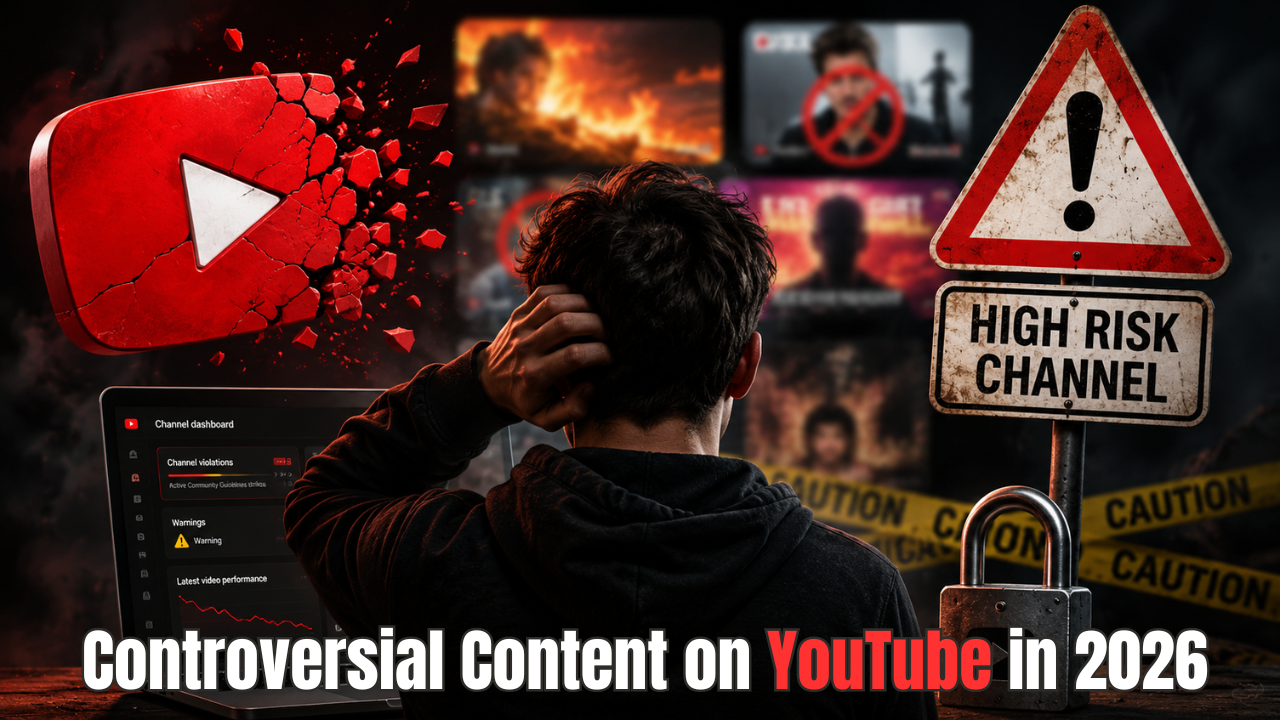
One of the biggest shifts happening across YouTube right now is that some of the platform’s most clickable content is also becoming some of its riskiest content. And many creators do not fully realise this until much later. Topics built around controversy, conflict, outrage, crime, exposed-style narratives, creator drama, sensitive social commentary, conspiracy-adjacent discussions, aggressive reactions, or emotionally charged storytelling often perform extremely well from an engagement perspective. They generate curiosity, retention, comments, shares, and repeat discussions all signals that naturally help content travel faster across recommendation systems.
From a pure performance standpoint, the strategy makes sense. But from a long-term monetisation and platform-trust perspective, the situation becomes far more complicated. Because while audiences may reward emotionally intense content, advertisers do not always respond the same way. And that gap is becoming increasingly visible in 2026.
How Creators Slowly Drift Into “Policy-Risk” Territory Without Realising It
Very few creators wake up one day intending to build risky channels. Most transitions happen gradually. A controversial upload performs well. Then another similar topic performs even better. Over time, creators naturally begin leaning more heavily into the formats, emotions, and narratives that generate stronger audience response. Slowly, the entire channel ecosystem starts shifting toward higher-intensity content because the algorithm appears to reward it. That is where the long-term risk begins.
Because platforms do not only evaluate isolated viral moments. They increasingly evaluate behavioural patterns over time. If a channel repeatedly relies on outrage-driven packaging, emotionally manipulative framing, fear-heavy narratives, sensitive social discussions, repetitive controversy cycles, or advertiser-sensitive themes to maintain performance, the platform may eventually begin interpreting the channel differently from how the creator sees it internally. And often, creators themselves do not notice how far the positioning has shifted until monetisation problems begin appearing.
Why Views and Advertiser Safety Are Becoming Two Different Conversations
For years, creators have largely associated success with numbers. More views meant better content. Higher watch time meant a stronger audience connection. Viral growth meant the strategy was working. And while those metrics still matter, YouTube’s ecosystem in 2026 appears to be separating audience success from advertiser comfort more aggressively than before.
That distinction is critical. A video can generate massive engagement while still creating advertiser hesitation. A channel can dominate recommendations while simultaneously increasing platform-risk perception internally. In many cases, creators confuse algorithmic success with long-term monetisation safety when the two are no longer always aligned. And this becomes especially dangerous when creators build entire business models around high-intensity content categories.
Because once audience expectations become tied to outrage, conflict, exposure, or controversy, pivoting the channel later becomes extremely difficult. The creator becomes trapped between what performs best and what remains safest for long-term monetisation sustainability.
Why Smaller Creators Often Feel More Vulnerable Than Bigger Channels
One frustration repeatedly voiced by creators is the belief that larger creators seem to “get away” with riskier content while smaller channels face stricter consequences. Whether fully accurate or not, that perception continues shaping creator conversations across the platform.
Part of this frustration comes from visibility. Larger creators often have established advertiser relationships, stronger audience trust, diversified revenue systems, dedicated moderation structures, and long-term platform history. Smaller creators, meanwhile, are usually far more dependent on direct monetisation stability from the platform itself. That creates a very different level of vulnerability.
A demonetisation event for a smaller creator can completely disrupt upload consistency, sponsorship opportunities, and channel sustainability. This is why many emerging creators feel pressured to chase high-performing, controversial formats while simultaneously fearing the consequences of doing so. And that tension is becoming one of the defining contradictions of the modern creator economy.
The Real Risk Is Building a Channel That Cannot Survive Without Controversy
The larger issue here is not controversy itself. Difficult conversations, criticism, commentary, investigative storytelling, and strong opinions will always remain important parts of digital media. The real concern is when creators become structurally dependent on outrage-driven performance to sustain growth. Because eventually, every platform ecosystem evolves. Advertiser expectations change. Moderation systems evolve. Policies tighten. Audience behaviour shifts. And creators who build entire channels around emotionally extreme content often struggle the most when those ecosystem changes begin affecting visibility or monetisation stability. This is why sustainable creators in 2026 are increasingly thinking beyond short-term virality.
They are thinking about balance. How much of the channel depends on outrage? How much depends on genuine informational value? Is the content ecosystem diversified enough to survive monetisation pressure? Is the audience returning for insight or simply for emotional stimulation? Those questions are becoming increasingly important for long-term channel stability. Because in today’s creator economy, the biggest challenge may no longer be going viral. It may be staying sustainable after the virality arrives.
As platform moderation, advertiser expectations, and monetisation systems continue evolving, conversations around sustainable content strategy are becoming increasingly important for creators across categories, something teams within the broader YouTube ecosystem, including Ping Network, continue observing closely while working with different styles of channels and content structures.