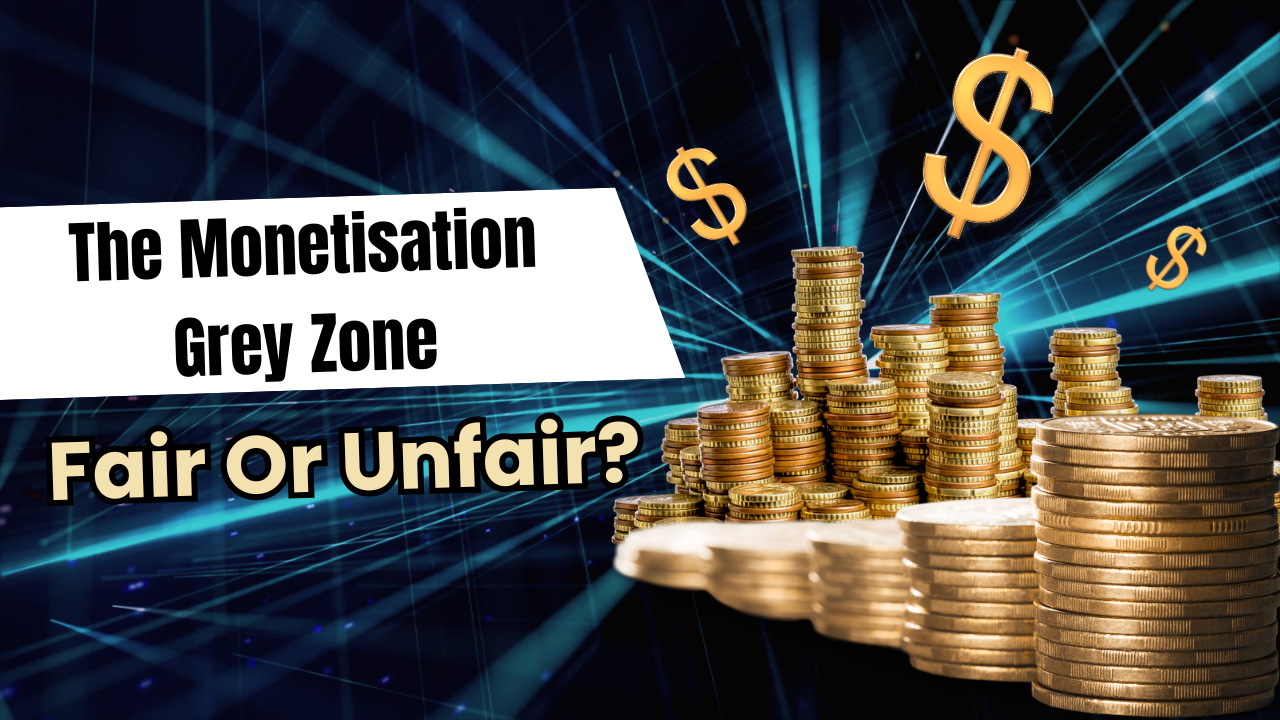
Over the last few years, YouTube monetisation has evolved from being a creator milestone into something much larger, a platform-wide trust system balancing creators, advertisers, audiences, regulators, and brand safety all at once. And in 2026, that balancing act is becoming increasingly visible. Today, more creators are finding themselves in situations where a demonetisation decision feels technically understandable, yet emotionally difficult to accept. Not because they were running obvious scams or uploading spam content, but because modern enforcement often operates in grey areas rather than black-and-white violations. Earlier, demonetisation discussions were mostly associated with clear policy abuse, reused content farms, misleading uploads, fake engagement, or blatantly advertiser-unfriendly material. But now, many affected channels are genuine creators with real communities, consistent uploads, and significant audience engagement. In several cases, the problem is not necessarily one specific video. It is the broader direction of the content itself.
How YouTube Is Increasingly Evaluating Channels as a Whole Instead of Individual Videos
A creator may see their content as commentary, education, criticism, storytelling, humour, or social analysis. The platform, however, may evaluate the same content through a completely different lens, one focused on advertiser suitability, risk patterns, viewer sensitivity, and long-term platform safety.
This becomes even more complicated because YouTube no longer appears to assess channels only upload by upload. Increasingly, channels seem to be evaluated holistically. Repeated topic choices, thumbnail style, metadata patterns, language intensity, controversial framing, sensitive discussions, and even the overall emotional tone of the channel can gradually influence how the system interprets risk. As a result, creators sometimes feel punished not for malicious intent, but for repeatedly operating close to policy-sensitive territory. And from YouTube’s perspective, that caution is not entirely irrational either.
The platform operates at a scale where millions of hours of content are uploaded constantly. Advertisers expect safe placements. Governments expect moderation. Audiences expect responsibility. In such an ecosystem, aggressive enforcement becomes part of maintaining platform stability. The challenge is that automated systems are designed to detect patterns quickly, not perfectly understand nuance every single time.
Why Intent Alone Is No Longer Enough to Protect Monetisation
That gap between nuance and automation is what many creators are now experiencing firsthand. A channel discussing crime stories may believe it is educational. A commentary creator may believe their criticism is a fair analysis. A reaction channel may feel their edits are transformative enough. But algorithmic systems and policy reviewers are often looking at broader behavioural signals rather than just creator intent alone.
This is why so many demonetisation cases today create divided opinions. On one side, people argue that YouTube is becoming overly strict and difficult for creators who work in sensitive or high-discussion categories. From the other side, advertisers and platforms increasingly want safer ecosystems with lower reputational risk. Both viewpoints can simultaneously hold some truth.
The real concern for creators is unpredictability. Because once monetisation becomes uncertain, the impact goes far beyond ad revenue. Sponsorships become harder to secure. Upload consistency suffers. Teams become unstable. Long-term planning weakens. And creators who have spent years building an audience suddenly find themselves questioning the sustainability of the entire business.
Why YouTube Monetisation in 2026 Is Becoming More About Risk Management Than Views
What makes the situation even harder is that many creators still approach monetisation as something passive, as if good viewership automatically guarantees platform trust. But in 2026, monetisation is becoming deeply connected to positioning, presentation, content direction, and perceived advertiser safety. In many ways, creators are no longer just managing channels. They are managing risk profiles.
And perhaps that is the biggest shift of all. The conversation around YouTube demonetisation is no longer simply about “right vs wrong.” It is increasingly about interpretation, positioning, scale, and platform caution in an ecosystem that is becoming more commercially sensitive every year.
Which raises a larger question for the creator economy going forward: Can platforms realistically moderate billions of pieces of content with enough nuance to protect advertisers without making genuine creators feel constantly uncertain at the same time?
As YouTube’s policies, monetisation systems, and advertiser expectations continue evolving, conversations around creator sustainability are becoming far more operational than they used to be, something the broader creator ecosystem, including teams like Ping Network, continues to observe closely across different categories of content and channel structures.