
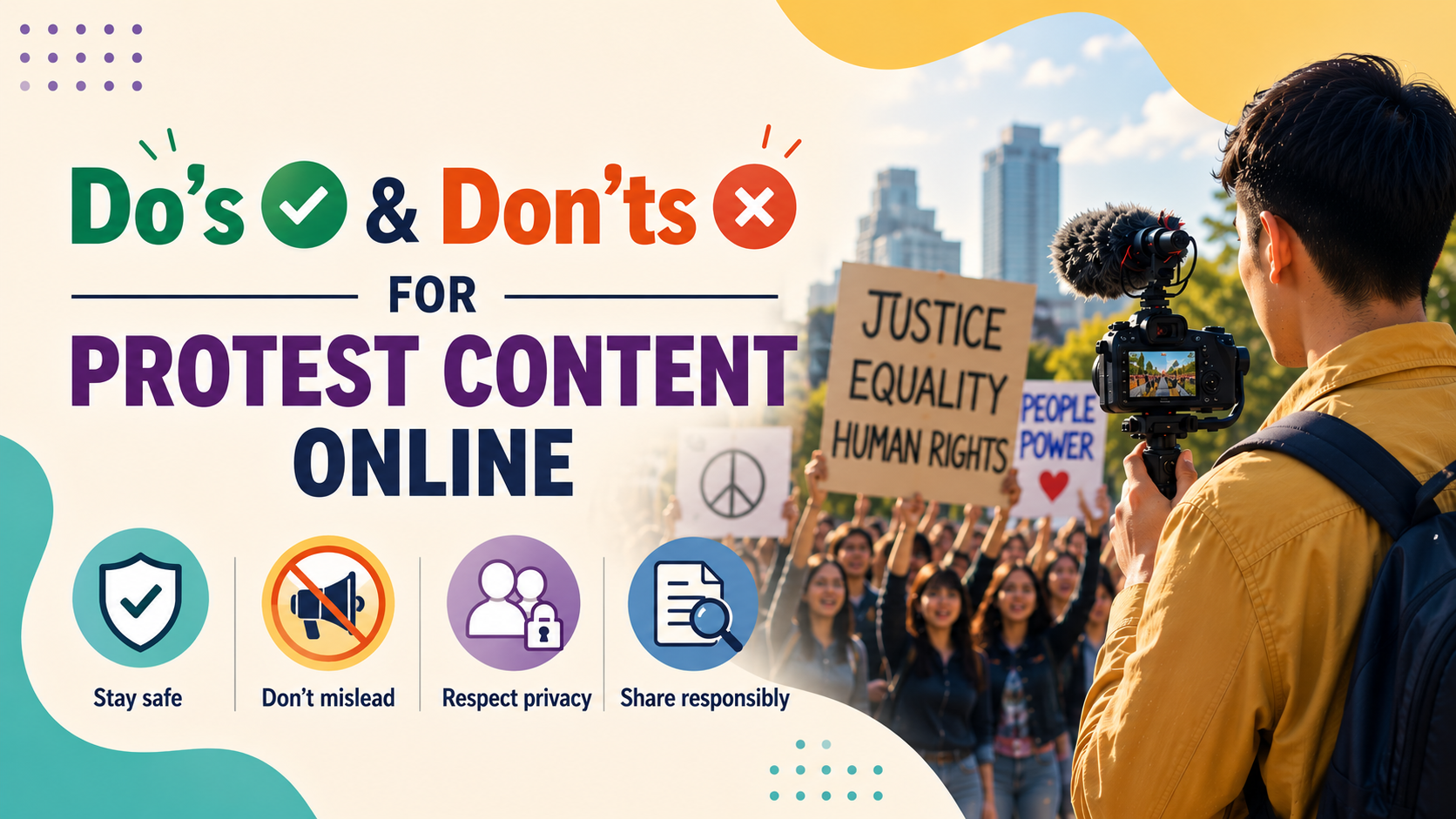
Most of the Damage Happens Before the Upload Button, Not After It.
If you have decided the video is worth making, the next set of decisions matters just as much as the first one. This is not a rulebook that guarantees a smooth upload — nothing does with this kind of content. It is a working checklist of the choices that consistently separate creators who cover a protest cleanly from those who end up dealing with a strike, a legal notice, or a story that follows their channel long after the event itself is forgotten.
Know the Ground Situation Before You Know Your Shot List
Before you film anything, find out whether the location is under any active prohibitory order, curfew, or assembly restriction, since these vary by state and city and change quickly during an unfolding situation. Filming is rarely illegal by itself, but being present at a restricted gathering can carry legal consequences that have nothing to do with what your camera captured. Have a clear sense of your exit route and a plan for what you do if the situation escalates while you are still rolling deciding this in advance is what keeps it a decision rather than a panic response.
Do Not Stage It, Even a Little
Asking someone to repeat a chant for a better angle, or re-walk a moment because the first take was shaky, crosses from documentation into fabrication and it is one of the fastest ways to lose credibility if it ever surfaces that a moment was staged. This applies even when your intent is harmless. If a shot is missed, it is missed; reconstructing it changes what the footage actually is.
Think About Who Is in Frame, Not Just What Is in Frame
A protester’s face in your video can have consequences for them long after your upload is forgotten, particularly if they face professional, social, or legal risk for being identified. Be deliberate about who you are filming closely versus who you are capturing incidentally in a wide shot, and be willing to blur or exclude faces of minors and clearly vulnerable individuals even if it costs you a stronger frame. This is a judgment call every time, not a fixed rule, but it should be a call you make consciously rather than one the edit makes for you by default.
Do Not Narrate Ahead of the Facts
It is tempting to add context live: who started it, why, whose fault it is, especially when you are trying to make sense of a chaotic scene in real time. Resist stating anything as fact that you have not actually confirmed, and be explicit on camera when you are speculating versus reporting what you can see. This single habit does more to protect you from a misinformation strike than almost anything else on this list, and it is also simply more honest to your audience.
Keep Your Raw Footage, Even the Parts You Do Not Use
Whatever you trim out of the final edit, keep the original files, with timestamps intact, somewhere safe. If a platform later questions the video, if someone disputes what happened, or if there is any legal follow-up, having the unedited footage is the difference between being able to substantiate your video and having only your final cut to stand on.
Do Not Mix Footage Across Events or Time
Reusing an old clip, or footage from a different city or a different protest entirely, to illustrate a point in a current video is one of the most common ways creators end up amplifying misinformation without intending to and it is also one of the fastest ways to lose an audience’s trust once discovered. If you use any archival or previously filmed material, say so on screen, not just in the description.
Write the Title and Thumbnail You Would Defend
A title or thumbnail built to provoke a click rather than represent what is actually in the video invites exactly the kind of scrutiny discussed in the first piece in this series from the platform, and from your audience. If you would not feel comfortable explaining the choice of title to the person appearing in your thumbnail, it is worth rewriting before you publish, not after the comments start.
Do Not Assume One Upload Fits Every Platform
A caption, title, or framing that clears review on one platform is not guaranteed to clear it on another, for the reasons covered in the first piece in this series. Take the extra few minutes to adjust wording and thumbnails per platform rather than cross-posting the identical package everywhere and hoping it lands the same way each time.
Watch the Comments Section as Closely as the Video
Once the video is live, what happens underneath it becomes part of what your channel is
associated with too. Harassment pile-ons, doxxing attempts, or coordinated abuse in your
comments can draw platform action even when the video itself was clean, so moderate actively rather than treating the comments section as someone else’s problem.
Even careful creators sometimes get flagged, demonetised, or taken down anyway. The next piece in this series covers exactly what to do when that happens, including how Ping Network’s Advocacy team approaches these appeals.