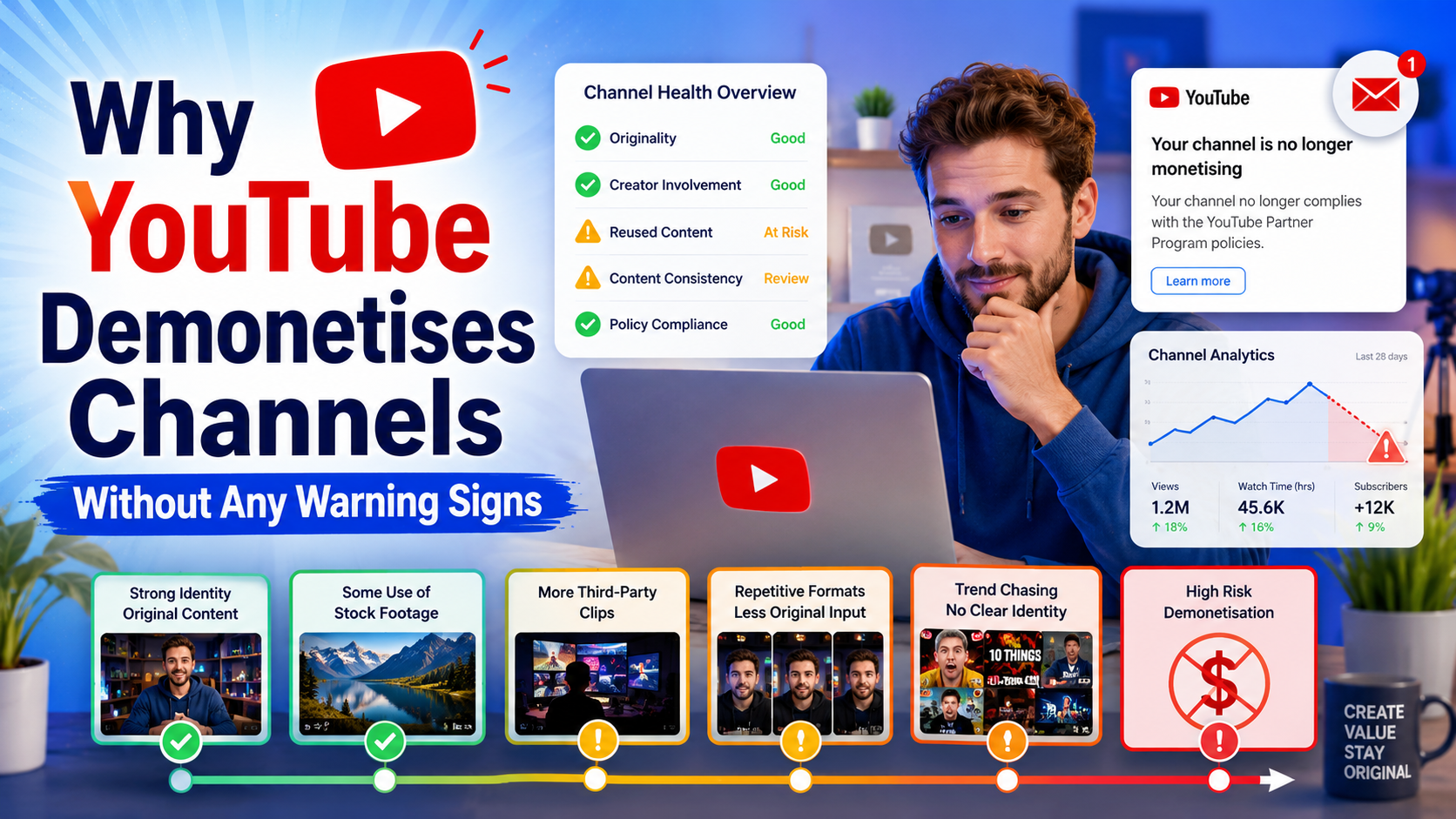
For many creators, YouTube demonetisation feels like it comes out of nowhere. One day, the channel is earning revenue as usual. The next, an email arrives stating that monetisation has been suspended because the channel no longer complies with the YouTube Partner Program policies. To the creator, it feels sudden and unexpected.
This often leads to a common question: “Why didn’t YouTube warn me before demonetising my channel?”
The reality is that while the final decision may seem abrupt, the factors that contribute to demonetisation usually develop over time. In many cases, creators unknowingly make gradual changes to their content strategy that slowly move the channel away from what YouTube expects from a monetised creator. These changes may not trigger immediate action individually, but together they can eventually result in a manual review and, in some cases, demonetisation. Understanding these less obvious warning signs can help creators identify potential risks long before they become a serious problem.
Demonetisation Is Usually About Patterns, Not One Video
One of the biggest misconceptions is that YouTube demonetises channels because of a single upload. While there are exceptional cases involving severe policy violations, most demonetisation decisions under the YouTube Partner Program are based on the overall quality and consistency of a channel rather than one isolated video.
Reviewers look at how the channel has evolved over time. They assess whether the content consistently demonstrates originality, meaningful creator involvement, and value for viewers. If multiple uploads begin showing similar issues, those patterns become far more significant than any single video. This is why creators are often surprised when a recent upload appears completely normal, yet the channel still loses monetisation. The decision is rarely about what happened yesterday. It is about the direction the channel has been moving in over weeks or months.
Small Changes Can Gradually Increase Risk
Many creators do not intentionally violate YouTube’s policies. Instead, they make small adjustments to improve efficiency or keep up with trends. They may begin relying more heavily on stock footage, use increasing amounts of third-party clips, adopt AI-generated narration without adding enough personal insight, or publish similar formats repeatedly because they performed well previously.
None of these choices automatically lead to demonetisation. However, if they gradually reduce the amount of original value the creator contributes, the overall perception of the channel can begin to change. The challenge is that these changes often happen so slowly that creators barely notice them themselves.
Consistency Matters More Than Individual Success
A channel can have millions of views and still face monetisation issues. High view counts do not automatically indicate compliance with YouTube’s monetisation policies. Likewise, one successful video does not guarantee that the entire channel demonstrates sufficient originality.
Reviewers evaluate the channel as a whole. They look for consistency in the way value is created, how the creator presents information, and whether viewers are receiving something beyond content that could easily be found elsewhere. Channels with a clear identity, consistent creator involvement, and a recognisable approach are generally much easier to evaluate than channels that constantly change formats or rely on different content styles with every upload.
Chasing Trends Can Sometimes Blur Your Channel's Identity
Following trends is a normal part of YouTube. It helps creators reach new audiences and stay relevant. Problems arise when trends begin replacing the creator’s own identity. Some channels start as educational resources but gradually become reaction channels. Others move from original storytelling to compilations because those videos require less production time. Some begin mixing unrelated niches simply because each topic performs well individually. Over time, the channel becomes difficult to define.
When there is no clear pattern showing what original value the creator consistently provides, it becomes harder for reviewers to understand why viewers should choose that channel over countless others covering similar topics. Growth should strengthen your identity, not replace it.
Many Creators Only Review Their Channel After Demonetisation
Businesses regularly perform audits before problems occur. Successful YouTube channels should adopt a similar mindset. Unfortunately, many creators only examine their content after monetisation has already been suspended. By then, the issues may have accumulated across dozens or even hundreds of uploads, making recovery more time-consuming than prevention would have been.
A periodic review of your own channel can reveal patterns that are easy to overlook during the day-to-day process of publishing videos. Looking at your uploads collectively rather than individually often provides a much clearer understanding of how your channel has evolved. Waiting for YouTube to identify problems should never be the first audit your channel receives.
Prevention Is Easier Than Recovery
Recovering from demonetisation often requires reviewing large amounts of content, making strategic improvements, and waiting for another manual assessment. Preventing demonetisation is usually far simpler.
Regularly evaluating your content strategy, maintaining a consistent creator presence, prioritising originality, and ensuring that every upload delivers meaningful value are habits that not only support monetisation but also strengthen the long-term health of your channel. Rather than asking whether a single video meets YouTube’s expectations, creators should ask whether their entire channel consistently reflects the quality and originality they want to be known for.
Final Thoughts
YouTube demonetisation rarely feels predictable because creators only see the final decision, not the gradual patterns that may have influenced it.
The best way to reduce that risk is not to wait for a warning email but to review your channel regularly, identify potential weaknesses early, and continue building content that clearly demonstrates originality and long-term value. A channel that consistently earns the trust of its audience is also far more likely to maintain the trust required for monetisation.
Worried About Your Channel's Monetisation?
You don’t have to wait until your channel is demonetised to find out something is wrong. At Ping Network, we help creators proactively review their channels, identify potential monetisation risks, assess content against YouTube Partner Program policies, and recommend practical improvements before they become bigger problems.
Whether you’re concerned about your current content strategy or simply want peace of mind, get in touch with Ping Network. A proactive audit today could help you avoid a lengthy recovery process tomorrow.