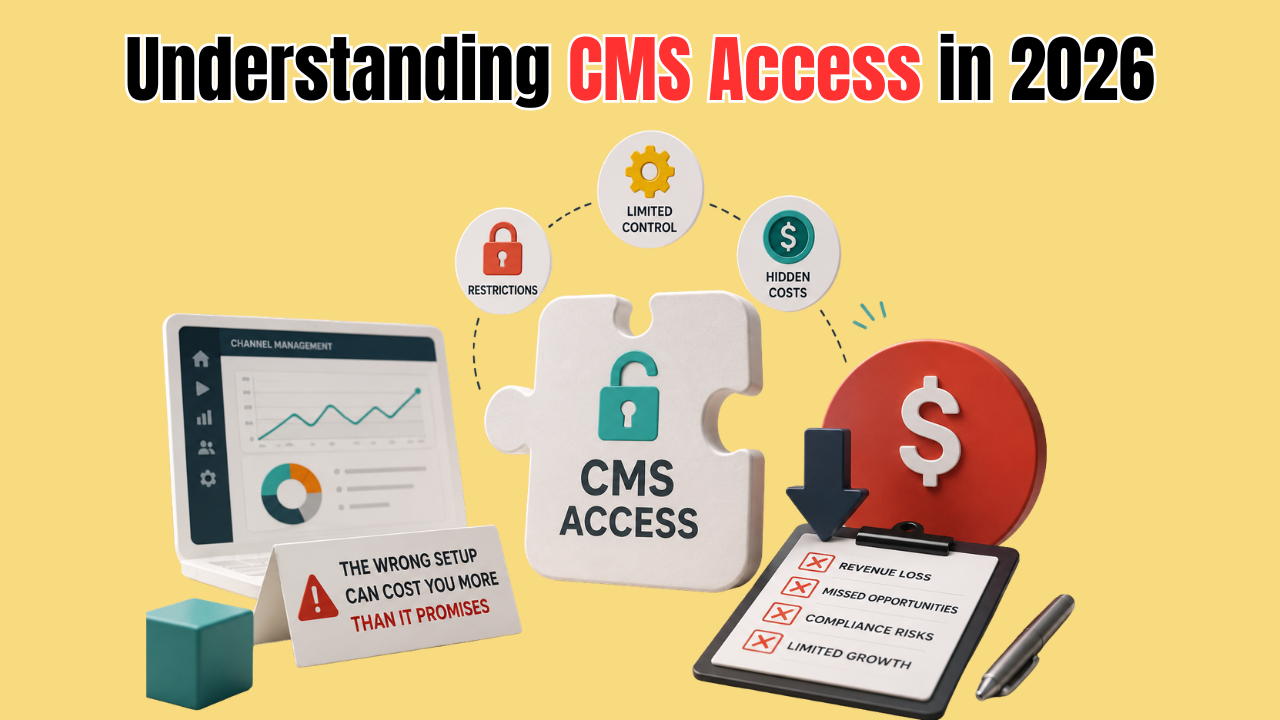
As YouTube continues to evolve, access to advanced tools like Content ID and CMS has become increasingly valuable. These systems are designed to help rights holders protect content, manage ownership, and monetise at scale. But alongside this growing demand, a parallel issue has started to surface again. CMS access is increasingly being positioned as a shortcut. Promises around instant monetisation, faster growth, or “ready-made” infrastructure are becoming more common. On the surface, these offers can look like opportunities. In reality, they often come with risks that most creators do not fully understand at the time of onboarding. The problem is not the tool itself. It is how it is being accessed and implemented.
What YouTube CMS and Content ID Actually Do
YouTube’s CMS (Content Management System) is built for managing rights at scale. It allows partners to control content ownership, apply policies, and use Content ID to identify and act on reused material across the platform.
When used correctly, it enables:
- Protection of original content
Content ID scans YouTube for matches of your video or audio, even if it has been re-uploaded or slightly modified. This allows creators to automatically detect unauthorised use instead of manually tracking piracy, which becomes nearly impossible as content scales. - Monetisation through claims
When your content is used by other channels, you can apply a claim and run ads on that video. This means you are not limited to earning only from your own uploads, but can also generate revenue wherever your content is being reused across the platform. - Structured control over distribution and usage
CMS allows you to define how your content behaves on YouTube, whether it should be blocked, monetised, or simply tracked. It also enables actions like geo-blocking, giving you control over where your content is available and how it is accessed.
However, these capabilities are designed for structured environments with clear ownership and policy management. Access without that structure often leads to problems.
Why Misuse of CMS Access Is Increasing
The demand for monetisation and content protection tools has grown significantly, and with that, so has the number of offers that simplify CMS access into something it is not. In many cases, creators are given access without proper clarity on how ownership works, how policies are applied, or what the long-term implications are. The system is introduced as a benefit, but not explained as a responsibility. This gap leads to decisions being made based on short-term gains, without understanding how these systems impact content, revenue, and channel health over time.
The Risks of Incorrect CMS Setup on YouTube
When CMS is not set up or managed correctly, the impact is often gradual but serious. Revenue can be affected due to incorrect claims or ownership conflicts. Content may be restricted or monetised in ways the creator did not intend. In some cases, control over content can become unclear between multiple parties. These issues do not always appear immediately, which makes them harder to identify early. But once the structure is in place, resolving them can become complex and time-consuming. This is why the initial setup matters more than most creators realise.
The Difference Between CMS Access and Infrastructure
One of the biggest misconceptions in the ecosystem is treating CMS access as a standalone offering. In reality, it is part of a larger system that includes rights management, policy control, and compliance with YouTube’s guidelines. Having access without the right framework behind it creates instability. It may function in the short term, but it does not scale well as content volume, collaborations, and monetisation complexity increase. For creators, this means the focus should not be on getting access quickly, but on understanding how that access is structured.
Why CMS Setup Directly Impacts Monetisation and Distribution
As creators move toward more structured monetisation strategies, whether through content protection, geo-based distribution, or platform partnerships, the role of CMS becomes more central. It is no longer limited to managing claims. It directly influences how content is owned, how revenue is distributed, and how content behaves across different regions and use cases. Any gaps in this setup can affect both earnings and long-term scalability.
How Creators Should Approach CMS the Right Way
The right approach to CMS begins with clarity. Creators need to understand how ownership is defined, how policies are applied, and how revenue flows through the system. Transparency and proper setup are far more important than speed. CMS should not be seen as a shortcut to monetisation, but as a structure that supports sustainable growth. When implemented correctly, it allows creators to protect their work, manage distribution, and monetise more effectively across the platform.
The Right CMS Setup Is a Long-Term Decision
CMS and Content ID are among the most powerful tools available within YouTube’s ecosystem. But their effectiveness depends entirely on how they are used. Shortcuts may promise faster results, but they often create long-term challenges that are difficult to fix. A well-structured setup, on the other hand, builds a strong foundation for content ownership, protection, and monetisation. Creators who approach this with the right understanding are far better positioned to grow sustainably.
Ping Network : Reliable YouTube CMS and Content ID Management
At Ping Network, we work with creators, publishers, and rights holders to build structured and compliant CMS setups focused on long-term control, accurate monetisation, and content protection. From Content ID management to rights structuring and revenue optimisation, the focus is on creating systems that are transparent, scalable, and aligned with YouTube’s ecosystem. If you are evaluating CMS access or looking to strengthen your current setup, Ping Network can help you make the right decisions from the start.