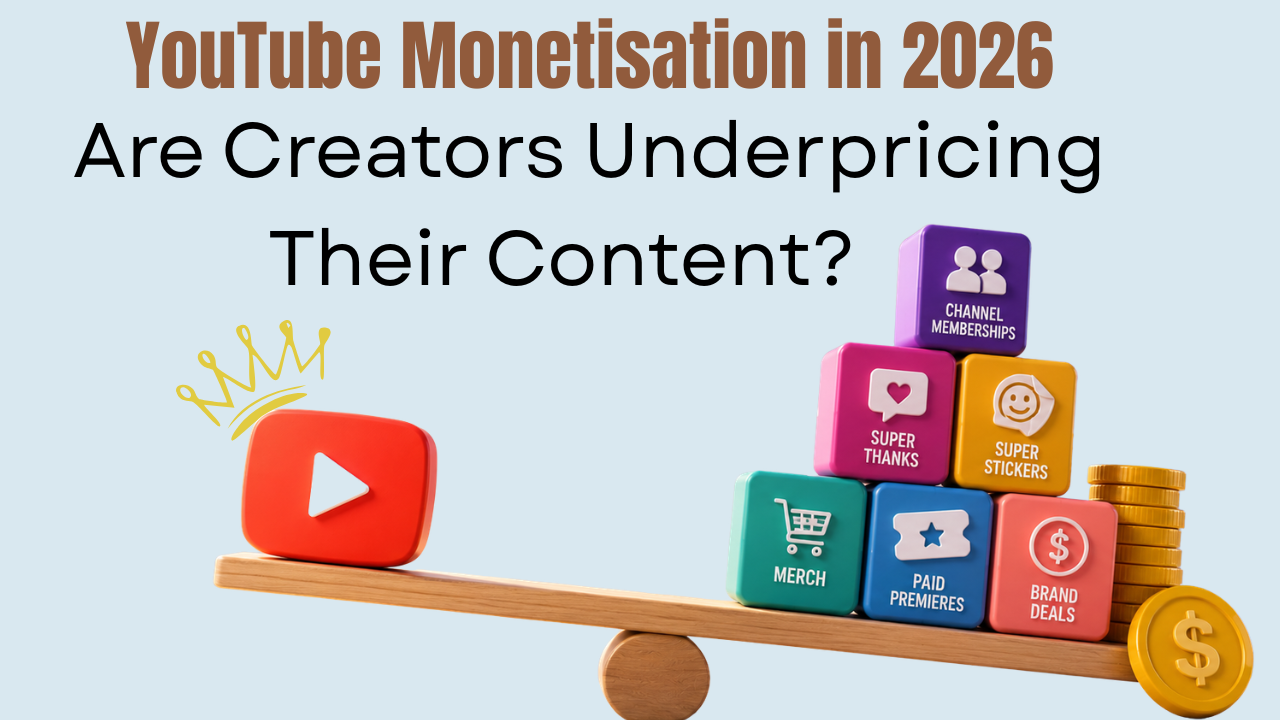
For years, the default monetisation model on YouTube has been simple: publish content, build views, and earn through ads. It worked when the scale was the primary goal. But in 2026, that model is starting to show its limitations. Ad revenue is no longer predictable, audience behaviour is evolving, and platform features are expanding in ways that allow creators to monetise more directly. While tools like channel memberships, Super Thanks, Super Stickers, and paid features are now widely available, many creators remain restricted to ad-based earnings, often without fully leveraging these options.
Despite this, many creators continue to rely almost entirely on ad revenue, even when their content has significantly greater value. This raises an important question: Are creators underpricing what they produce?
Why Ad Revenue Alone Is No Longer a Reliable YouTube Monetisation Strategy
Advertising still plays a major role in YouTube earnings, but it is influenced by factors that creators do not fully control. Geography, seasonality, advertiser demand, and platform-level changes can all impact revenue, even when content performance remains consistent. This creates a gap between effort and earnings.
A video that performs well in terms of views and engagement does not always translate into stable income. For creators building long-term businesses, this unpredictability makes it difficult to plan, invest, or scale. As a result, monetisation needs to evolve from a single-source model to a more structured approach.
Understanding Direct Monetisation on YouTube Beyond Ads
YouTube today offers multiple ways for creators to monetise directly from their audience. Features like memberships, paid live streams, and fan support tools have made it possible to generate revenue without relying entirely on advertisers. However, the challenge is not the availability of these tools; it is how they are used.
Many creators either ignore them or apply them without a clear strategy. In some cases, everything remains free despite having a highly engaged audience. In others, monetisation is introduced without considering whether the audience is ready for it. The key is not to lock content behind a paywall blindly, but to understand where direct monetisation makes sense.
When Should You Charge for Content on YouTube?
Not every piece of content should be monetised directly. Open access remains critical for discovery, growth, and audience building. But certain types of content naturally carry higher value. Live events, exclusive drops, early access releases, and niche or high-effort formats often attract audiences who are willing to go beyond passive viewing. In such cases, offering an additional layer of access rather than restricting everything can create a more balanced monetisation model. The shift here is subtle but important. Instead of asking whether content should be free or paid, creators need to ask which part of their content ecosystem can carry premium value.
Why Audience Behaviour Is Changing the Monetisation Equation
Today’s audience is not just consuming content, they are choosing how they want to engage with it. Some viewers are comfortable watching ads. Others prefer uninterrupted experiences. A smaller but highly valuable segment is willing to pay for exclusivity, convenience, or deeper engagement. This creates multiple monetisation paths within the same audience. Ignoring this variation often leads to underpricing. When everything is treated as ad-supported content, creators miss the opportunity to capture value from audiences who are willing to contribute more. Understanding audience intent, therefore, becomes as important as understanding content performance.
The Risk of Underpricing Content on YouTube
Underpricing does not always look obvious. It can appear as consistently high-performing content that generates low revenue. It can show up in formats that require significant effort but are distributed in the same way as low-effort uploads. It can also exist in communities that are highly engaged but are not given any option to support the creator directly. Over time, this creates a sustainability problem. Creators continue to grow in reach but not in revenue. Content quality becomes harder to maintain, and long-term planning becomes uncertain. Addressing this does not require drastic changes. It requires a more intentional approach to how content is monetised across different formats and audience segments.
Building a Balanced YouTube Monetisation Strategy
A sustainable monetisation strategy today is rarely built on a single revenue stream. Ads continue to play a role, especially for discovery and scale. But combining them with direct monetisation options creates a more stable and diversified model. The focus should not be on maximising revenue from every viewer, but on creating multiple pathways where different types of audiences can engage at different levels of value. This approach allows creators to maintain reach while gradually introducing monetisation layers that align with audience behaviour.
Monetisation Is Not Just About Views Anymore
The way content is monetised on YouTube is changing. Views still matter, but they are no longer the only indicator of value. Engagement, audience intent, and access design are becoming equally important in determining how content generates revenue. Creators who continue to treat all content the same risk leaving value on the table. Those who start thinking in terms of structured monetisation—where some content builds reach, and some captures value will be better positioned to grow sustainably in the long run.
How Ping Network Helps Creators Unlock Better YouTube Monetisation
At Ping Network, we work with creators and publishers to move beyond basic monetisation models and build structured revenue strategies on YouTube. From optimising ad performance to implementing direct monetisation approaches and managing rights through CMS and Content ID, the focus is always on helping creators extract the full value of their content. If you’re looking to build a more stable and scalable monetisation strategy, Ping Network can help you get there.