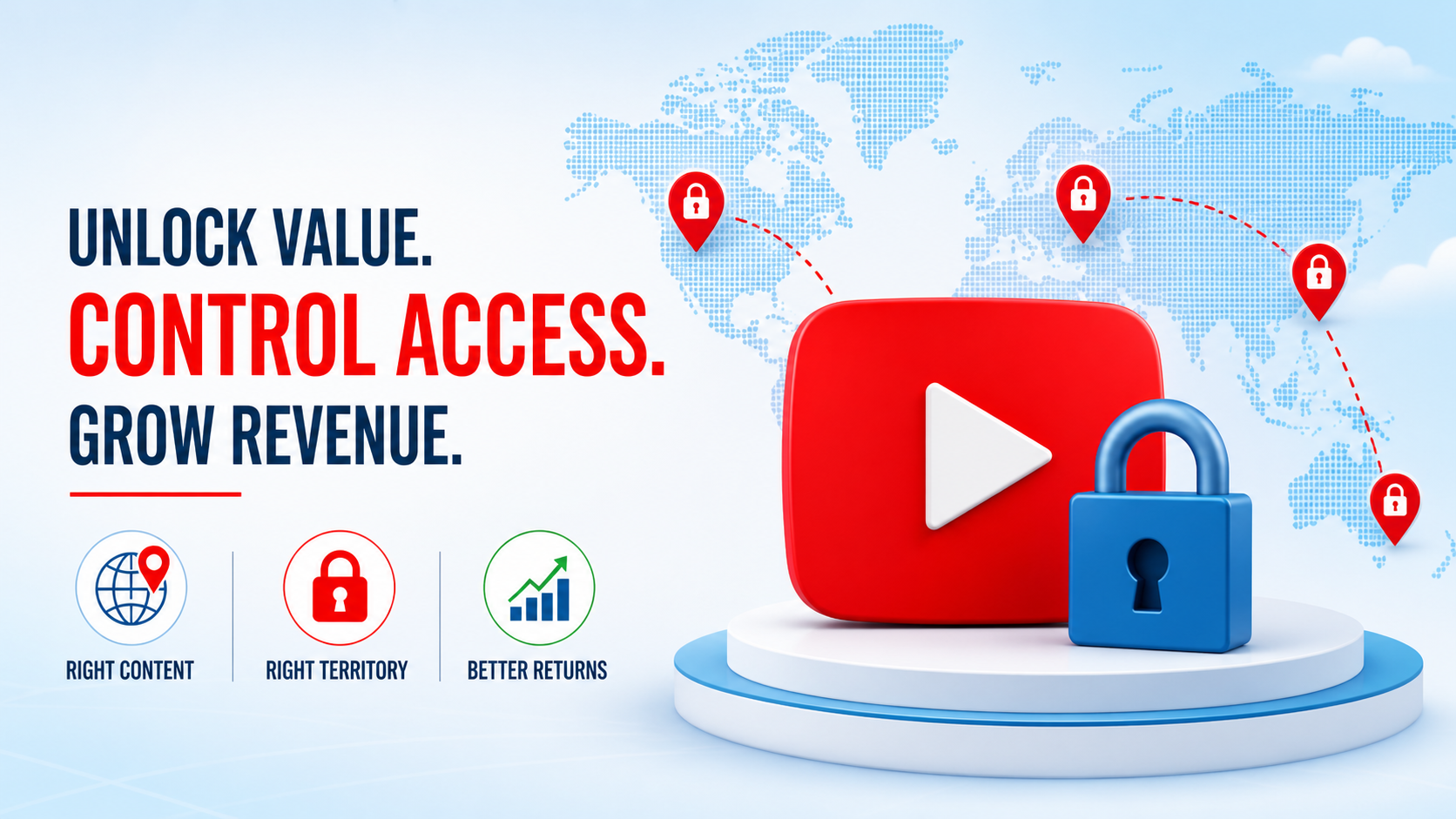
For a long time, geo-blocking on YouTube has been used for one primary reason: control. Well, first of all, what is YouTube Content Geo-blocking? It simply means restricting or allowing access to a video based on the viewer’s location, using YouTube’s rights management system. It helped rights holders manage where their content could be viewed, ensuring compliance with licensing agreements and avoiding conflicts across platforms or regions. But the role of geo-blocking is evolving. What was once a backend restriction is now becoming part of a broader YouTube monetisation strategy, especially for creators and publishers who are starting to think beyond open distribution and ad revenue alone. At its core, this shift is not about limiting reach. It is about structuring access in a way that aligns with value.
What Geo-Blocking on YouTube Actually Does (And What Most Creators Miss)
Geo-blocking allows creators and rights managers to control the availability of content across specific territories using YouTube’s CMS. This is commonly used when content rights are sold to a platform in a particular region or when certain markets need to be excluded due to legal or distribution constraints. For most creators, this is where the understanding stops. However, the real opportunity lies in what geo-blocking enables beyond compliance. It allows content to be distributed differently across markets instead of following a single global release model. This becomes especially relevant when you consider that not all audiences behave the same way, and not all regions offer the same monetisation opportunities within the platform itself.
How Geo-Blocking Supports YouTube Monetisation Beyond Ads
One of the biggest challenges creators face today is the unpredictability of ad revenue. Earnings fluctuate based on geography, advertiser demand, and seasonality, making it difficult to rely entirely on ads as a stable income stream. Geo-blocking introduces an alternative way to think about monetisation, not by replacing ads, but by supporting structured distribution strategies.
For example, instead of making content universally available at the same time, creators can choose to control where and how it is accessed. This opens up possibilities such as aligning with platform distribution deals, managing release timing across regions, or creating differentiated viewing experiences depending on the audience. The key point here is not the restriction itself, but the ability to design how content flows across markets.
YouTube Monetisation Strategies & Regional Limitations
A critical factor that often gets overlooked is that YouTube’s monetisation features are not uniformly available across all regions. Certain tools, including premium features or direct audience monetisation options, may be limited or unavailable in specific markets. This has two important implications.
First, a monetisation strategy that works in one region may not work in another. Second, relying on a single approach across all geographies can lead to missed opportunities or underperformance in certain markets. Geo-blocking, when used correctly, helps address this by allowing creators to adapt their distribution strategy based on regional realities—whether that involves platform partnerships, content timing, or audience behaviour.
From Global Publishing to Strategic Content Distribution on YouTube
The traditional approach to YouTube has been simple: publish content and make it available globally. While this still works for many formats, it does not always maximise value, especially for premium, event-based, or high-investment content.
What is changing now is the shift from global publishing to strategic distribution. In industries like sports broadcasting and film, controlled distribution has always been the norm. Content is released in phases, rights are segmented by territory, and access is carefully managed to maximise revenue. Creators are beginning to adopt similar thinking. Instead of asking how to reach everyone at once, the focus is gradually shifting to how content can be positioned differently across markets to create better outcomes.
Why Geo-Blocking Matters More in 2026
Recent changes in platform behaviour and monetisation trends have made this shift more relevant than ever. Ad revenue volatility has highlighted the risks of depending on a single income stream. At the same time, audiences are showing stronger engagement with exclusive or limited-access content, particularly in formats like live events or niche programming. These changes point toward a more structured future where distribution decisions play a bigger role in monetisation outcomes. Geo-blocking fits into this ecosystem as a foundational tool, not because it generates revenue directly, but because it enables creators to move from passive publishing to intentional distribution.
Smart Competitive Advantage on YouTube
Geo-blocking was never designed to be a monetisation feature. But in today’s landscape, it is becoming an important part of how monetisation strategies are built. The ability to control where content is available, how it is accessed, and how it is positioned across regions is turning into a competitive advantage, especially for creators and publishers operating at scale. As the platform continues to evolve, those who understand how to combine distribution control with monetisation thinking will be better positioned to build sustainable and diversified revenue streams.
How Ping Network Helps You Build Smarter YouTube Monetisation Strategies
At Ping Network, we work closely with creators, publishers, and rights holders to design practical YouTube monetisation and distribution strategies from geo-blocking and rights management to Content ID and revenue optimisation. If you’re looking to move beyond basic monetisation and build a more structured approach to your content business, explore how Ping Network can support your growth.