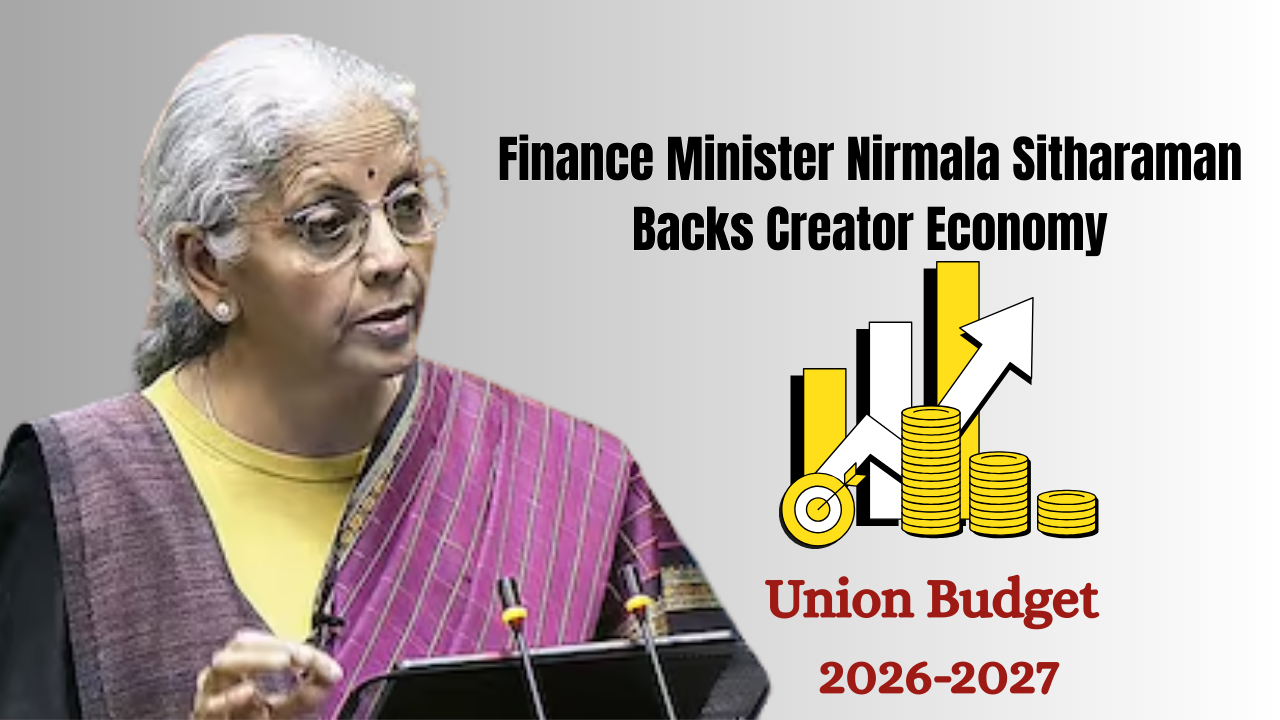
In the Union Budget 2026-27, presented on 1 February 2026, Finance Minister Nirmala Sitharaman unveiled a range of initiatives aimed at strengthening India’s digital and creative industries. Among these was a targeted allocation of ₹250 crore to create creator labs across India, promote talent development in the emerging creator economy, especially in animation, gaming, visual effects and digital content creation.
What Is the Creator Economy? Why India Is Focusing on the Creator Economy?
The creator economy refers to the ecosystem of individuals and small teams who produce digital content videos, games, animations, comics, graphics and other media — often distributed on platforms like YouTube, Instagram, gaming portals, and streaming services. This sector blends creativity with technology, turning digital skills into careers and businesses. India’s creative digital industries are part of the government’s so-called “Orange Economy,” a term used to describe sectors where cultural and creative talents generate economic value. The Budget highlighted this orange economy as strategic for future job creation and innovation.
The creator economy in India has evolved rapidly over the last decade. What began as a handful of independent YouTubers and bloggers has grown into a large, decentralised workforce creating videos, games, animations, podcasts, and digital IP for both domestic and global audiences. Affordable smartphones, low-cost data, and platform monetisation tools have allowed creators from non-metro towns to build sustainable careers without traditional gatekeepers.
From the government’s perspective, this shift offers three clear advantages. First, creators generate employment at scale with relatively low infrastructure costs compared to manufacturing. Second, creative content contributes to exportable digital services, helping India earn global revenue without physical logistics. Third, the ecosystem supports entrepreneurship and self-employment, aligning with India’s demographic reality of a young, digitally native population.
As the sector matures, the focus is moving from informal, self-taught pathways to structured skill development, quality control, and long-term talent pipelines. The Budget 2026 allocation reflects this transition, recognising creators not just as influencers but as a strategic economic asset shaping India’s digital, cultural, and technological footprint.
What the Budget 2026 Announces: Why ₹250 Crore Matters
In the Budget, the government earmarked ₹250 crore specifically for talent development within the Animation, Visual Effects, Gaming, and Comics (AVGC) sector. This is significant because it represents one of the first major budgetary commitments in India focused squarely on building the human capital needed for a broad creator ecosystem. This allocation will be part of the Demands for Grants under the Ministry of Information and Broadcasting and is aimed at enhancing skills, infrastructure and opportunities for young creators.
What Are “Creator Labs”?
The centrepiece of this initiative is the proposal to establish AVGC Content Creator Labs across the country: 15,000 secondary schools & 500 colleges.
will host dedicated labs where students can access tools and training related to animation, gaming, visual effects and other creative media disciplines. These labs are not just physical spaces; they are envisioned as hubs where young students can learn practical digital skills, experiment with creative technologies, and prepare for future careers in content creation. The funding is meant to support the Indian Institute of Creative Technologies (IICT), Mumbai, in leading the establishment of these labs under a hub-and-spoke model with IICT serving as a central node for research, training and collaboration with industry partners.
Why Education & Creators Are Being Linked
Traditionally, creative digital fields like animation and game development were learnt informally or in specialised institutes. By integrating creative skills into school and college environments, the Budget seeks to:
- Democratize access to technology and creative training beyond big cities
- Build a talent pipeline for a sector projected to require millions of professionals by 2030
- Bridge the gap between academic learning and industry requirements
- Encourage entrepreneurship and new career pathways for youth interested in media production and digital storytelling
Industry stakeholders, including creative and gaming associations, have welcomed the move as it addresses a longstanding skills gap and formalises pathways into creative fields.
What Is The Expected Impact ?
While ₹250 crore may appear modest within the total national budget, its strategic focus is what sets it apart. Instead of subsidising hardware or providing broad tax breaks, the allocation directly targets talent development, a critical long-term ingredient for growth in digital content sectors. By equipping educational institutions with labs and promoting hands-on learning, the initiative could:
- Enhance the employability of students in creative tech jobs
- Fuel growth in domestic animation, gaming and digital media production
- Reduce dependency on foreign training or outsourcing for creative work
- Position India as a contributor to global digital content markets
What This Could Mean for India’s Future
The combination of policy intent, financial allocation, and industry backing suggests this is not a symbolic gesture but a strategic bet on India’s creative workforce. By embedding creative skills into educational institutions and supporting early exposure to digital content tools, India is:
- Building capacity for future industries where storytelling meets technology.
- Enabling new career ecosystems that extend beyond traditional corporate or technical tracks.
- Positioning the nation to compete in international creative and digital markets
In essence, this ₹250 crore investment is modest in absolute fiscal terms but strategic in impact reflects a new policy mindset: one that values creative skills as economic infrastructure in the digital age. We at Ping MCN believe that by integrating creator labs into educational institutions, the focus now shifts from self-taught experimentation to early-stage skill development, hands-on learning, and industry-aligned training. It signals a broader policy shift recognising creativity, storytelling, and digital media skills as long-term economic assets. This move marks a structural shift in how creators are viewed in India. If implemented well, it can help the ecosystem move from fragmented growth to a more sustainable, skill-driven model that supports higher-quality content and stronger digital IP.