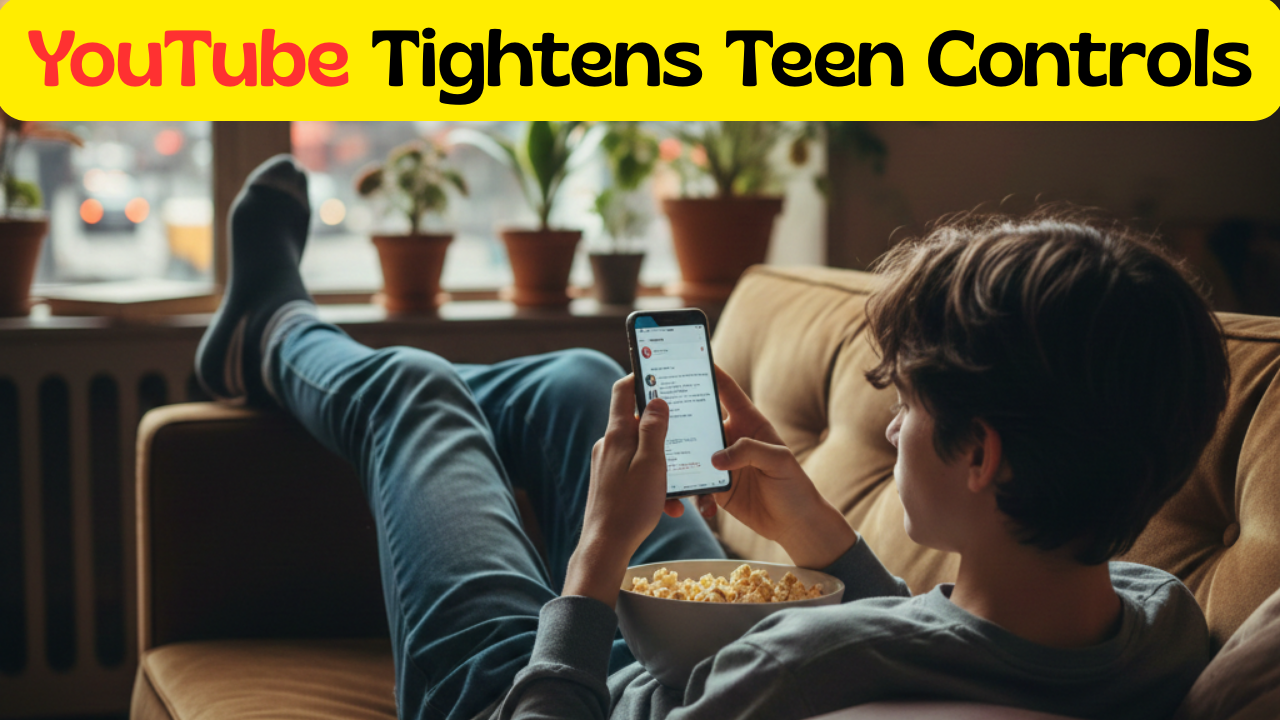
YouTube has announced a significant update to its parental control features, giving parents more authority over how their teenagers use the platform, especially when it comes to YouTube Shorts, its endlessly scrolling short-form video feed. This move signals a broader shift in how major platforms are responding to concerns around screen addiction, mental well-being, and age-appropriate content consumption. For families, it adds long-awaited control. For creators and networks, it marks an important change in how teen audiences may engage with content going forward.
What’s Changing on YouTube?
Under the new update, parents supervising a teen’s account can now set daily time limits specifically for Shorts, ranging from zero minutes to up to two hours. Shorts can also be completely disabled when needed. YouTube has positioned this as a flexibility feature — for example, parents can turn off Shorts during homework hours and allow limited access during travel or leisure time.
Alongside Shorts controls, parents can now:
- Set custom bedtime reminders
- Enable “take a break” alerts
- Manage these settings more actively rather than relying only on YouTube’s default under-18 protections
According to YouTube, these updates are part of a wider effort to make teen usage healthier and more intentional, rather than driven by endless scrolling.
Why YouTube Is Doing This Now
Short-form video formats are powerful and addictive by design. Parents, child-safety advocates, and lawmakers globally have raised concerns that infinite scroll feeds encourage excessive screen time, particularly among teenagers. YouTube’s response reflects growing regulatory and social pressure on platforms to take preventive responsibility, not just reactive moderation. This also aligns with YouTube’s recent decision to use AI to estimate users’ ages, placing suspected teens into stricter safety settings even if a different age is entered at sign-up. Other platforms like Instagram and Character.AI have also rolled out tighter parental controls, indicating an industry-wide shift rather than a one-off update.
Changes to Teen Content Recommendations
Beyond time limits, YouTube is also refining what content teens are shown. The platform says it will prioritise recommendations that focus on:
- Curiosity and inspiration
- Life skills and real-world experiences
- Credible information that supports well-being
At the same time, YouTube will continue limiting repeated exposure to content that could push teens toward harmful patterns — such as videos that idealise extreme body types or unhealthy behaviours. For creators, this means quality, value-driven content is likely to be favoured over purely addictive formats when targeting teen audiences.
Is This Available in India Yet?
As of now, YouTube has not announced a specific India-only rollout date for Shorts time limits. The update has been announced globally, but features like these are typically released in phases and rolled out gradually through supervised accounts and Family Link controls. Indian parents should expect these tools to appear progressively rather than instantly. Creators and MCNs should also prepare for changes in teen viewing behaviour as these controls become more widely available.
A Bigger Conversation Around Parental Authority
The update comes amid renewed debate around who should control teen accounts. Recently, YouTube’s parent company, Google, faced criticism after notifying a nearly 13-year-old user that they would soon be able to remove parental supervision. Following backlash from child-safety advocates, Google updated its policy to ensure parental approval is required before supervision can be removed, reinforcing that families, not platforms, should decide when teens are ready for full account independence.
Ping MCN’s Perspective
At Ping MCN, we see this as a necessary and overdue step. The creator economy has matured, and so has the responsibility that comes with reaching younger audiences.
For creators, this update reinforces an important reality:
- Sustainable growth will come from trust, value, and relevance, not just screen time
- Teen audiences will increasingly be shaped by quality filters, not just algorithms
- Platforms are moving toward health-first engagement, and creators must adapt accordingly
For parents, these tools offer a better balance. For creators and brands, they mark a shift toward more mindful content ecosystems.If you’re a creator or brand navigating audience changes, policy updates, or platform shifts in 2026, Ping MCN helps you stay ahead. responsibly, strategically, and sustainably.
PING MCN’s View on the Future of Podcasting
At PING MCN, we see podcasts as evolving media IPs rather than isolated episodes. The next phase of podcasting belongs to creators and brands that design podcasts for discovery, longevity, and monetisation from the outset. For podcasters looking to transition from audio-only to video-first, build reach beyond podcast apps, and convert conversations into sustainable value, reach out to PING MCN for the strategy and infrastructure to evolve without losing depth or identity.