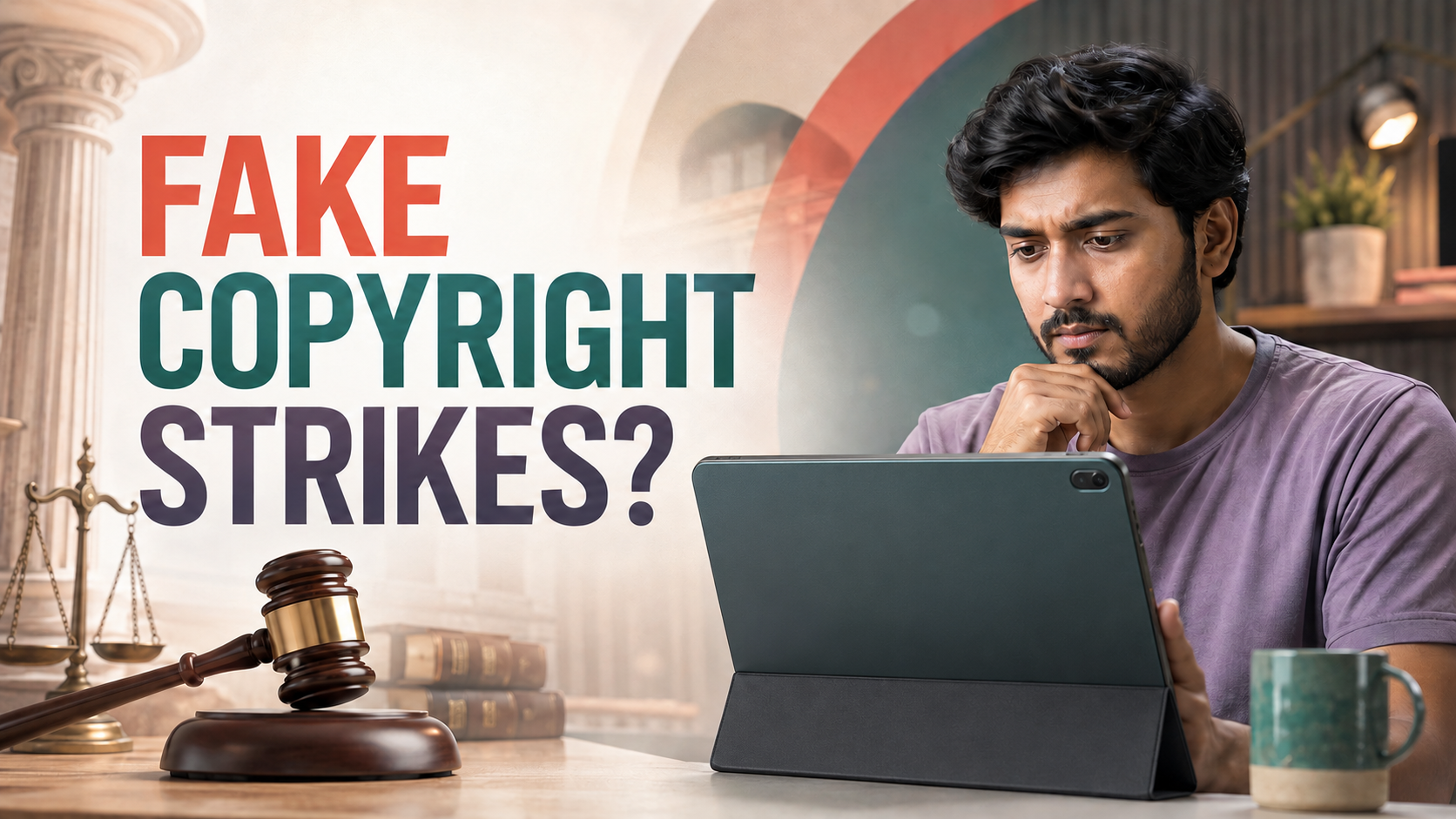
For content creators, copyright protection tools are supposed to offer security against unauthorised uploads. But what happens when the same system intended to protect original creators is allegedly used against them?
That concern recently reached the Delhi High Court after content creator Mohit Kumar alleged that unknown individuals downloaded his original videos, registered them as their own through Meta’s Rights Manager and then used the system to issue copyright strikes against his accounts. The case raises a much larger question for the creator economy: Are platforms doing enough to verify ownership before giving someone the power to remove another creator’s content?
What Happened in the Mohit Kumar Copyright Case?
Mohit Kumar, who creates educational content under the name “Rise With Mohit,” approached the Delhi High Court after allegedly receiving fraudulent copyright strikes on his original content. According to Kumar, individuals downloaded his videos and used Meta’s Rights Manager to falsely claim ownership. They were then allegedly able to issue copyright strikes against the very creator who had originally produced and published the content.
Kumar also claimed that he had applied for access to Meta Rights Manager three times but was rejected without receiving a clear explanation. Meanwhile, accounts with considerably smaller audiences appeared to have gained access to the tool. The situation led the Delhi High Court to question why genuine and established creators could be denied access to a copyright-protection tool while people accused of misusing the system were seemingly able to use it. Justice Anup Jairam Bhambhani compared the situation to giving the key to a robber instead of the owner of the house.
What Is Meta Rights Manager?
Meta Rights Manager is a copyright-management tool designed for eligible rights holders publishing content across Facebook and Instagram. Once approved, rights holders can upload reference files representing content they own. Meta’s system then searches Facebook and Instagram for matching material. Depending on the available settings and the rights holder’s preferences, matching content may be monitored, blocked or reported for further action.
In principle, it gives creators, media companies and other copyright owners a way to identify unauthorized copies of their work. However, the Mohit Kumar case highlights the risks that arise if ownership is not adequately verified before reference files are accepted. If someone registers copied content as their own, the copyright-protection system itself can potentially be weaponised against the original creator.
Why Did the Delhi High Court Question Meta?
The Delhi High Court asked Meta to place its Rights Manager policy and eligibility requirements on record. It also sought clarity on how applications are evaluated and why creators may be denied access. The central issue is not simply whether Kumar should have received access. The case raises questions about transparency, verification and accountability across the entire copyright-enforcement process.
If a platform gives users the ability to block content or issue copyright claims, it must have effective safeguards to confirm that the claimant actually owns the work. At the same time, genuine creators need clear explanations when their applications for copyright-protection tools are rejected. The court also observed that this did not appear to be an isolated problem. Similar concerns have emerged in other disputes involving creators and allegedly false copyright complaints. The matter is scheduled to be heard again on September 24, 2026, alongside a connected case involving another creator.
How Did Meta Respond?
Meta informed the court that the disputed copyright strikes against Kumar had been reversed and that content removed because of those claims had been restored. The company also stated that Kumar’s accounts had not been suspended and remained accessible. Subject to technical verification, Meta said that the accounts would not be removed on the basis of the disputed claims. Meta further agreed to review Kumar’s Rights Manager application after verifying his claims and to submit its relevant access policies and eligibility criteria before the court. While these steps provide immediate relief to the creator involved, the broader questions around access and misuse remain unresolved.
How Can Fake Copyright Strikes Affect Original Creators?
A fraudulent copyright claim can affect much more than one post or video.
Repeated claims may disrupt a creator’s reach, revenue and publishing schedule. In more serious cases, they may lead to content removal, account restrictions or suspension. For professional creators, this can also affect brand partnerships, contractual commitments and the commercial value of years of accumulated content. The appeals process can be particularly difficult when the original creator does not have well-organised records demonstrating when and how the content was produced.
Creators often assume that publishing a video first is enough to establish ownership. An earlier upload date may help, but it does not always settle a dispute by itself. The other party may claim that the creator lacked the rights to publish the content in the first place.
This makes documentation essential.
What Should Creators Do When Facing a False Copyright Claim?
Creators should preserve their raw footage, project files, scripts, drafts, export history and original upload records. Contracts, invoices, music licences, talent releases and communication with editors or production partners should also be retained. These materials can help demonstrate the complete creation history of a video rather than relying only on the date it appeared publicly.
If a false claim is received, the creator should document the notice, claimant information, affected content and all communication with the platform. Appeals should be submitted through official channels with clear evidence of ownership. Creators should also avoid immediately deleting and re-uploading disputed content. Doing so may remove useful records, create duplicate enforcement issues or make the ownership timeline more difficult to establish.
Why Creators Need a Cross-Platform Content-Protection Strategy
The case demonstrates why creators should not depend entirely on the copyright system of one social media platform. Content frequently travels between YouTube, Facebook, Instagram and other platforms. A video originally uploaded in one place may be copied, edited and republished elsewhere within hours. If an unauthorised uploader then claims ownership, the original creator may suddenly be forced to prove that the work belongs to them.
YouTube Content ID does not automatically protect videos on Facebook or Instagram, nor does a Content ID registration alone provide conclusive legal proof of copyright ownership. However, for eligible original content, it can create an additional documented rights-management trail connecting a creator or rights holder with the work. When supported by raw footage, project files, publishing records and valid agreements, this additional layer may strengthen the creator’s position when challenging a malicious claim on another platform.
This is also where the onboarding process itself matters. MCNs and Content ID partners like Ping Network typically require verified proof of ownership — production records, publishing history, valid agreements — before a channel or asset is onboarded onto Content ID. It’s the same kind of verification step the Delhi High Court is now asking Meta to account for, in a system where established creators were denied access while accounts with far less credibility reportedly obtained it. The important lesson is not that one platform’s system can replace another. It is that creators need several consistent layers of documentation and protection, built on partnerships that verify ownership upfront rather than after a dispute has already caused damage.
Copyright Protection Must Protect the Creator, Not the Impostor
The Delhi High Court’s scrutiny of Meta Rights Manager reflects a wider challenge facing the creator economy. Automated copyright tools can process enormous volumes of content, but their effectiveness depends on who receives access, how ownership is verified and how quickly false claims are corrected.
Platforms need clearer eligibility policies, stronger claimant verification and faster human review in cases involving disputed ownership. This is precisely why serious rights-management partnerships are built around verified ownership checks rather than self-declared claims — the exact gap the Mohit Kumar case has exposed in automated, self-serve systems. Creators, meanwhile, must treat ownership records and content protection as essential parts of their publishing process—not as steps to consider only after a dispute begins. Copyright problems do not always remain limited to the platform where they originate. If you own eligible original video content, securing it through YouTube Content ID can add another valuable layer to your rights-management strategy.
As a YouTube Certified Multi-Channel Network, Ping Network verifies ownership before onboarding any channel or asset onto Content ID — closing exactly the kind of gap this case has exposed. If you’re an eligible creator or production house looking to protect your original video content, reach out to Ping Network for a free eligibility check