How To Grow Your Long Form In A Short Dominated Era

Let’s rewind the time to around 5-6 years ago, shall we? We open YouTube on our phone or our laptop, and all we can see is the feed being dominated by the now-what-we-call the longform videos. The YouTube grid ranges from tutorial videos to mini-series drama and everything in between. We would happily consume content of even 5 minutes to more than 25 minutes in one go. Then comes 2020, while we are all stuck at our homes relying on content for our source of entertainment and also accompaniment, YouTube launches ‘Shorts’.

The arrival of Shorts not only shocked the YouTube audience but also the creators. All of a sudden, the YouTubers were scratching their heads to adapt to this new form of content creation. However, with no time, the vertical format of videos started to rule the screens of the audience. While YouTube itself pushed this new format, it was also the audience who eventually developed a liking towards it.

However, it must be noted that despite short-form videos finding their way to audiences’ YouTube feed, the viewer still hasn’t forgotten YouTube’s horizontal video, or, as we call them, the long-form content. The Shorts videos now range from tutorials to skits, just like the older long-form earlier did, but it hasn’t in any way changed the popularity of the latter.

As we have entered the year 2026, the “Shorts vs. Long-form debate” has shifted from a competition to a partnership. With YouTube Shorts now reaching over 200 billion daily views and long-form content dominating 70% of total watch time, the question isn’t which one to choose, it’s how to play them against each other.

Let’s decode this debate for now:

SHORTS:

Shorts ‘Discovery Magnet – As a content creator on YouTube in 2026, you must understand that the YouTube algorithm, as of now, is pushing the Shorts content towards the viewers. This initial push has led to many creators getting discovered by a huge number of audiences. Unlike the long-form video, where the viewer must click on the video to view it, Shorts presents itself. It is estimated that roughly 74% of Shorts views come from non-subscribed audiences. This low-friction discovery is what propels Short-form content to get audiences’ attention.

3-Minute Expansion Key – When Shorts as a video format was launched on YouTube, the maximum video length was 15 seconds, which was later pushed to 60-seconds. However, by the time 2025 rolled in, the video length for Shorts content had become 3 minutes. Hereby, allowing viewers to dive into ‘Micro-Storytelling’ concepts beyond trendy memes, and boosting engagement on the channel and the content.

Usage for Rapid Testing – As a creator, if you wish to try a niche topic as your content or want to expand on existing content, Shorts can be used as Rapid Testing. A 1-minute video deep-diving into your niche will not only give the viewer an insight into your content, but also help you understand their interaction with the content in terms of views, engagement and average view duration.

LONG FORM:

Content Empire: While Shorts are a game of launching you into instant engagement and views, long-form content is still the king. If you pick your niche and build your content around it, slowly and steadily, the long-form video will garner viewership. This way you not only aid your visibility butalso build a content empire that has a longer shelf life.

Subscriber/Viewer Loyalty: Longform video content helps create a bond with the viewer/subscriber. It is tough to build deep authority or personal brand loyalty in short-format video. Viewers who sit through a 12-minute video are significantly more likely to buy your products, join your memberships, or trust your recommendations.

Monetary Factor: As a creator, you must also remember the monetary factor of long-form and short-form content. There’s a significant difference between the two, and someone who is new to YouTube or has been in the industry for a long time, this difference is what makes longform a long-term investment

  • Shorts RPM: Typically ranges from $0.01 to $0.07.
  • Long-form RPM: Can range from $2.00 to $10.00+, depending on the niche.
  • Money Flow: Longform content allows for mid-roll ads, high-ticket sponsorships, and evergreen search traffic that pays off for itself over the years.

Improve Your Long Form Content in a Shorts Dominated Era

YouTube is heavily promoting Shorts. They drive discovery, quick engagement, and fast subscriber growth. But that doesn’t mean long-form content is losing value. In fact, long-form is still where deep engagement, watch time, authority-building, and higher revenue truly happen. The key is not to compete with Shorts but to use them strategically.

Even if short-form content is getting more visibility, long-form remains the foundation of serious channel growth. But to grow long-form today, it needs to evolve. First, strengthen your hook. The first 30–60 seconds decide everything. Viewers now have lower patience due to fast-paced content consumption. Get to the core promise quickly. Clearly state what they will gain and why it’s worth their time. Second, tighten your structure. Long-form does not mean slow-form. Remove unnecessary intros, repeated explanations, and filler visuals. Every minute should add value. Strong scripting, smooth pacing, and clear segment transitions dramatically improve retention.

Third, upgrade storytelling and engagement. Even educational or informational videos need narrative flow. Use examples, mini case studies, pattern breaks, on-screen elements, or questions to keep the viewer mentally involved throughout.
Fourth, improve packaging and positioning. Your thumbnail and title must communicate a strong outcome, not just a topic. Instead of saying what the video is about, highlight what the viewer will achieve or understand after watching.
Finally, focus on consistency and topic depth. Build authority in a niche instead of jumping between random trends. When viewers know what to expect from your channel, they return for more long-form content. Long-form growth today isn’t about making longer videos; it’s about making sharper, clearer, and more intentional ones.

Conclusion:

The most successful creators in 2026 use an 80/20 Content Split: 20% effort on “Shorts” to lure people in, and 80% on “Long-form” to keep them there. Hence, the verdict is – Do not choose. Use Shorts to find your target audience, and keep creating long-form content to keep them hooked onto your channel.
Everything Creators Need to Know About YouTube Policy Update

Over the past year, we’ve started noticing a clear shift in how monetisation reviews and policy enforcement play out on YouTube. Content that previously met technical eligibility requirements is now being evaluated more closely for how original or transformative it actually is. In practice, this means publishing patterns, creative ownership, and overall presentation are beginning to matter as much as traditional thresholds. The policy updates through 2025, along with early signals emerging for 2026, point toward a broader change in how content is assessed, moderated, and ultimately monetised.

Monetization & The Authenticity Mandate (YPP 2025)

The central theme of the 2025 policy update is the distinction between original and “inauthentic content”.

Policy Area Key Change / Rule Impact on Creators
Authenticity Focus YouTube clarified rules against “inauthentic” (formerly “repetitious”) content. Channels risk losing monetization if content is mass-produced, repetitive, or lacks clear value-add.
AI Content AI is permitted as a tool, but content generated purely by AI without human transformation is at risk. Must add personal commentary, voiceovers, or creative input to AI-assisted videos.
Originality More emphasis on original content, storytelling, and unique perspectives. Focus shifted from volume to quality and creative input. Basic YPP thresholds remain unchanged.

What We’re Seeing in Practice

In several recent monetisation reviews, the issue hasn’t been one clear violation. More often, it’s a pattern that builds over time. Channels following very similar formats, uploading at scale, or making only small variations between videos tend to face closer scrutiny, even when individual uploads look compliant on their own. In practical terms, this means decisions are increasingly influenced by overall publishing behaviour rather than a simple checklist, making consistent creative differentiation more important than volume alone.

Creator Action Plan:

  • Transform Content: Every video, especially if using reused or AI-assisted material, must feature personal voiceovers, commentary, or significant creative edits.
  • Avoid Bulk Uploads: Resist uploading near-identical content simply to fill a quota.

Platform Safety and Community Guidelines

YouTube continues to strengthen safeguards, particularly for younger audiences, while providing clearer moderation standards.

Safety and Restriction Updates

  • Age-Sensitive Content: Stricter age restrictions now apply to graphic violence (e.g., in gaming) and online gambling/social casino content (often requiring 18+ limits).
  • Moderation Nuance: Updates to “public interest” exceptions allow nuanced debates to remain online, focusing enforcement efforts on content that violates policy regardless of context.

2026 Forward: AI Integration and Platform Evolution

The strategic direction for 2026 revolves around integrating AI into creator workflows and diversifying revenue streams.

Key Developments Expected in 2026

Advanced AI and Creative Tools

Feature Description Goal
AI Shorts Generation Tools to create Shorts, potentially using creators' own AI likenesses. Enhance short-form content production efficiency.
Creator AI Assistance AI for analytics interpretation, content ideation, and editing support. Support creators, not replace them.
Enhanced Formats Integration of still photos directly into the Shorts feed. Broaden creative options for short-form video.

Monetization Diversification

  • YouTube is actively exploring deeper brand integration and in-app shopping features, expanding earning potential beyond traditional ad revenue.

Enhanced Safety

  • The platform is developing improved parental controls and sophisticated content moderation systems to ensure a safer environment for young users.

How PING MCN Supports This Shift

As platform evaluation continues to evolve, many creators and production teams are finding that compliance is no longer limited to individual videos but extends to overall publishing behaviour and content strategy.

PING MCN works with channel owners and studios to interpret these platform signals, review publishing patterns, and help align content operations with evolving monetisation and authenticity expectations. The focus is not only on resolving immediate risks but on building sustainable, policy-aligned growth over the long term.

How India’s 2026 Budget Plans to Boost the Creator Economy

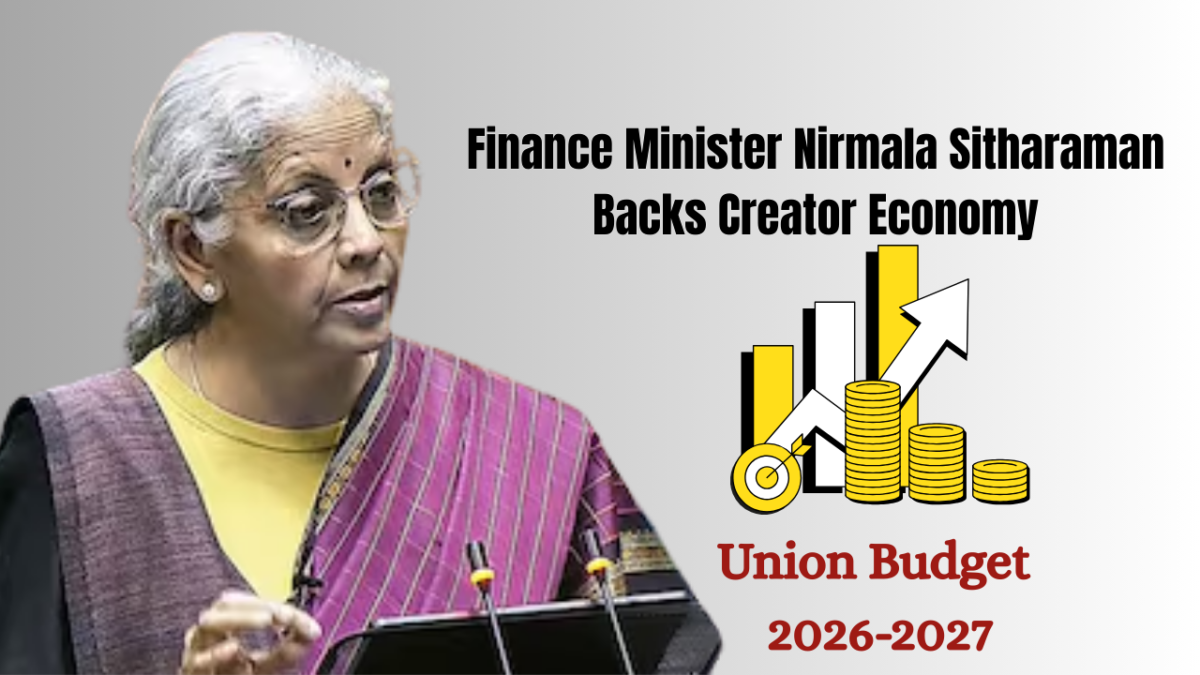
In the Union Budget 2026-27, presented on 1 February 2026, Finance Minister Nirmala Sitharaman unveiled a range of initiatives aimed at strengthening India’s digital and creative industries. Among these was a targeted allocation of ₹250 crore to create creator labs across India, promote talent development in the emerging creator economy, especially in animation, gaming, visual effects and digital content creation.

What Is the Creator Economy? Why India Is Focusing on the Creator Economy?

The creator economy refers to the ecosystem of individuals and small teams who produce digital content videos, games, animations, comics, graphics and other media — often distributed on platforms like YouTube, Instagram, gaming portals, and streaming services. This sector blends creativity with technology, turning digital skills into careers and businesses. India’s creative digital industries are part of the government’s so-called “Orange Economy,” a term used to describe sectors where cultural and creative talents generate economic value. The Budget highlighted this orange economy as strategic for future job creation and innovation.

The creator economy in India has evolved rapidly over the last decade. What began as a handful of independent YouTubers and bloggers has grown into a large, decentralised workforce creating videos, games, animations, podcasts, and digital IP for both domestic and global audiences. Affordable smartphones, low-cost data, and platform monetisation tools have allowed creators from non-metro towns to build sustainable careers without traditional gatekeepers.

From the government’s perspective, this shift offers three clear advantages. First, creators generate employment at scale with relatively low infrastructure costs compared to manufacturing. Second, creative content contributes to exportable digital services, helping India earn global revenue without physical logistics. Third, the ecosystem supports entrepreneurship and self-employment, aligning with India’s demographic reality of a young, digitally native population.

As the sector matures, the focus is moving from informal, self-taught pathways to structured skill development, quality control, and long-term talent pipelines. The Budget 2026 allocation reflects this transition, recognising creators not just as influencers but as a strategic economic asset shaping India’s digital, cultural, and technological footprint.

What the Budget 2026 Announces: Why ₹250 Crore Matters

In the Budget, the government earmarked ₹250 crore specifically for talent development within the Animation, Visual Effects, Gaming, and Comics (AVGC) sector. This is significant because it represents one of the first major budgetary commitments in India focused squarely on building the human capital needed for a broad creator ecosystem. This allocation will be part of the Demands for Grants under the Ministry of Information and Broadcasting and is aimed at enhancing skills, infrastructure and opportunities for young creators.

What Are “Creator Labs”?

The centrepiece of this initiative is the proposal to establish AVGC Content Creator Labs across the country: 15,000 secondary schools & 500 colleges.

will host dedicated labs where students can access tools and training related to animation, gaming, visual effects and other creative media disciplines. These labs are not just physical spaces; they are envisioned as hubs where young students can learn practical digital skills, experiment with creative technologies, and prepare for future careers in content creation. The funding is meant to support the Indian Institute of Creative Technologies (IICT), Mumbai, in leading the establishment of these labs under a hub-and-spoke model with IICT serving as a central node for research, training and collaboration with industry partners.

Why Education & Creators Are Being Linked

Traditionally, creative digital fields like animation and game development were learnt informally or in specialised institutes. By integrating creative skills into school and college environments, the Budget seeks to:

  • Democratize access to technology and creative training beyond big cities
  • Build a talent pipeline for a sector projected to require millions of professionals by 2030
  • Bridge the gap between academic learning and industry requirements
  • Encourage entrepreneurship and new career pathways for youth interested in media production and digital storytelling

Industry stakeholders, including creative and gaming associations, have welcomed the move as it addresses a longstanding skills gap and formalises pathways into creative fields.

What Is The Expected Impact ?

While ₹250 crore may appear modest within the total national budget, its strategic focus is what sets it apart. Instead of subsidising hardware or providing broad tax breaks, the allocation directly targets talent development, a critical long-term ingredient for growth in digital content sectors. By equipping educational institutions with labs and promoting hands-on learning, the initiative could:

  • Enhance the employability of students in creative tech jobs
  • Fuel growth in domestic animation, gaming and digital media production
  • Reduce dependency on foreign training or outsourcing for creative work
  • Position India as a contributor to global digital content markets

What This Could Mean for India’s Future

The combination of policy intent, financial allocation, and industry backing suggests this is not a symbolic gesture but a strategic bet on India’s creative workforce. By embedding creative skills into educational institutions and supporting early exposure to digital content tools, India is:

  • Building capacity for future industries where storytelling meets technology.
  • Enabling new career ecosystems that extend beyond traditional corporate or technical tracks.
  • Positioning the nation to compete in international creative and digital markets

In essence, this ₹250 crore investment is modest in absolute fiscal terms but strategic in impact reflects a new policy mindset: one that values creative skills as economic infrastructure in the digital age. We at Ping MCN believe that by integrating creator labs into educational institutions, the focus now shifts from self-taught experimentation to early-stage skill development, hands-on learning, and industry-aligned training. It signals a broader policy shift recognising creativity, storytelling, and digital media skills as long-term economic assets. This move marks a structural shift in how creators are viewed in India. If implemented well, it can help the ecosystem move from fragmented growth to a more sustainable, skill-driven model that supports higher-quality content and stronger digital IP.


How to Use YouTube Advertising the Right Way

YouTube advertising is often misunderstood. Many creators see it as a quick fix for low views, while brands treat it as just another media buying channel. In reality, YouTube ads are neither magic nor harmful by default. They are simply a distribution tool. The results depend entirely on how and why you use them. Over the years, YouTube has clearly separated paid promotion from organic discovery. Running ads does not “confuse the algorithm,” nor does it guarantee growth. What ads do is introduce your video to new viewers. What happens next is decided by the quality of your content and the behaviour of those viewers.

What YouTube Advertising Actually Does

YouTube advertising, powered through YouTube Ads, allows your video to appear in places where organic reach may take time, like search results, home feeds, suggested videos, Shorts feed, and before other videos. This exposure is paid for, but engagement is not. If viewers skip, scroll past, or drop off early, YouTube records that behaviour separately from your organic performance. This is why ads don’t “damage” your channel, but they also don’t save weak content.

When Using YouTube Ads Makes Sense

YouTube ads work best when there is already clarity. If you are launching a new channel, ads can help you reach your first real audience. If you have an evergreen video that performs well organically, ads can help scale it faster. They are also useful when promoting product-tagged videos, seasonal content, or campaigns where timing matters. Where ads fail is when they are used to push videos that struggle with retention, unclear messaging, or weak thumbnails. In those cases, ads only accelerate poor performance and burn budget quickly.

Understanding Ad Formats Without Overcomplicating Them

YouTube offers multiple ad formats, but you don’t need to use all of them. In-feed video ads are best when you want viewers to choose your video, making them ideal for recipes, tutorials, reviews, and educational content. Skippable in-stream ads are more interruptive but useful for announcements, launches, or strong hooks. Short ads work well for quick awareness but require content designed specifically for fast, vertical consumption. Choosing the right format is less about trends and more about how your content is meant to be consumed.

The Importance of Setting the Right Goal

Most failed YouTube ad campaigns start with the wrong objective. Running a campaign optimised for views when the real goal is sales or subscriber leads can lead to misleading results. YouTube will deliver exactly what you ask for, even if that’s low-intent viewers. Creators and brands should be clear whether the goal is discovery, engagement, conversion, or testing content. The campaign structure, bidding, and targeting all depend on this decision.

How Targeting Really Works on YouTube

Contrary to popular belief, aggressive targeting often reduces performance. YouTube’s system works best when it has room to learn. Broad signals such as content context, search intent, and viewer behaviour usually outperform overly narrow interest stacks. Remarketing, however, is where YouTube ads shine. Reaching viewers who have already watched your videos or interacted with your channel often delivers the highest quality results.

How to Evaluate Performance Beyond the Dashboard

Ad metrics like impressions, CPV, and CTR only tell part of the story. What truly matters is how viewers behave after clicking. Do they continue watching? Do they explore other videos? Do they engage or convert? Paid views should support long-term organic growth, not exist in isolation. If ads bring viewers who behave like organic audiences, the campaign is doing its job.

A Common Mistake Creators Make

The biggest mistake creators make is expecting ads to replace consistency, storytelling, or audience understanding. Ads can amplify momentum, but they cannot create it from nothing. Treating YouTube advertising as a shortcut almost always leads to disappointment.

The MCN Perspective

From an MCN standpoint, YouTube advertising works best when combined with strong fundamentals clear positioning, optimised thumbnails, compelling titles, and a content strategy that already shows promise organically. At PING Network, we don’t run ads to inflate numbers. We use them to test content, accelerate growth responsibly, and support monetisation without damaging long-term channel health.

Ready to Use YouTube Ads the Right Way?
Running YouTube ads without a clear strategy can waste budget and distort performance. At PING Network, we help creators and brands use YouTube advertising responsibly, aligning paid reach with organic growth, audience retention, and long-term monetisation. Whether you’re testing content, scaling evergreen videos, or driving product sales, our team ensures ads work with your channel, not against it.

Get in touch with PING Network to plan smarter YouTube ad campaigns, protect your channel health, and turn visibility into sustainable growth.

YouTube Introduces Shorts Time Limits for Teens: What Parents & Creators in India Should Know

YouTube has announced a significant update to its parental control features, giving parents more authority over how their teenagers use the platform, especially when it comes to YouTube Shorts, its endlessly scrolling short-form video feed. This move signals a broader shift in how major platforms are responding to concerns around screen addiction, mental well-being, and age-appropriate content consumption. For families, it adds long-awaited control. For creators and networks, it marks an important change in how teen audiences may engage with content going forward.

What’s Changing on YouTube?

Under the new update, parents supervising a teen’s account can now set daily time limits specifically for Shorts, ranging from zero minutes to up to two hours. Shorts can also be completely disabled when needed. YouTube has positioned this as a flexibility feature — for example, parents can turn off Shorts during homework hours and allow limited access during travel or leisure time.

Alongside Shorts controls, parents can now:

  • Set custom bedtime reminders
  • Enable “take a break” alerts
  • Manage these settings more actively rather than relying only on YouTube’s default under-18 protections 

According to YouTube, these updates are part of a wider effort to make teen usage healthier and more intentional, rather than driven by endless scrolling.

Why YouTube Is Doing This Now

Short-form video formats are powerful and addictive by design. Parents, child-safety advocates, and lawmakers globally have raised concerns that infinite scroll feeds encourage excessive screen time, particularly among teenagers. YouTube’s response reflects growing regulatory and social pressure on platforms to take preventive responsibility, not just reactive moderation. This also aligns with YouTube’s recent decision to use AI to estimate users’ ages, placing suspected teens into stricter safety settings even if a different age is entered at sign-up. Other platforms like Instagram and Character.AI have also rolled out tighter parental controls, indicating an industry-wide shift rather than a one-off update.

Changes to Teen Content Recommendations

Beyond time limits, YouTube is also refining what content teens are shown. The platform says it will prioritise recommendations that focus on:

  • Curiosity and inspiration
  • Life skills and real-world experiences
  • Credible information that supports well-being

At the same time, YouTube will continue limiting repeated exposure to content that could push teens toward harmful patterns — such as videos that idealise extreme body types or unhealthy behaviours. For creators, this means quality, value-driven content is likely to be favoured over purely addictive formats when targeting teen audiences.
 

Is This Available in India Yet?

As of now, YouTube has not announced a specific India-only rollout date for Shorts time limits. The update has been announced globally, but features like these are typically released in phases and rolled out gradually through supervised accounts and Family Link controls. Indian parents should expect these tools to appear progressively rather than instantly. Creators and MCNs should also prepare for changes in teen viewing behaviour as these controls become more widely available.

A Bigger Conversation Around Parental Authority

The update comes amid renewed debate around who should control teen accounts. Recently, YouTube’s parent company, Google, faced criticism after notifying a nearly 13-year-old user that they would soon be able to remove parental supervision. Following backlash from child-safety advocates, Google updated its policy to ensure parental approval is required before supervision can be removed, reinforcing that families, not platforms, should decide when teens are ready for full account independence.

Ping MCN’s Perspective

At Ping MCN, we see this as a necessary and overdue step. The creator economy has matured, and so has the responsibility that comes with reaching younger audiences.

For creators, this update reinforces an important reality:

  • Sustainable growth will come from trust, value, and relevance, not just screen time
  • Teen audiences will increasingly be shaped by quality filters, not just algorithms
  • Platforms are moving toward health-first engagement, and creators must adapt accordingly

For parents, these tools offer a better balance. For creators and brands, they mark a shift toward more mindful content ecosystems.If you’re a creator or brand navigating audience changes, policy updates, or platform shifts in 2026, Ping MCN helps you stay ahead. responsibly, strategically, and sustainably.

PING MCN’s View on the Future of Podcasting

At PING MCN, we see podcasts as evolving media IPs rather than isolated episodes. The next phase of podcasting belongs to creators and brands that design podcasts for discovery, longevity, and monetisation from the outset. For podcasters looking to transition from audio-only to video-first, build reach beyond podcast apps, and convert conversations into sustainable value, reach out to PING MCN for the strategy and infrastructure to evolve without losing depth or identity.

How To Grow Your Podcast On YouTube In 2026

For the first time since podcasting entered the Indian mainstream, creators are questioning the future of the format. Growth has slowed for many audio-only shows, sponsorship budgets have become more selective, and discoverability on podcast apps feels increasingly limited. This has led to a widely repeated conclusion that podcasts are “on the way down.”That conclusion misses the larger picture. Podcasts are not declining; they are moving from an early, experimental phase into a more mature and demanding media environment. What worked five years ago is no longer sufficient, and formats that fail to evolve are naturally losing momentum. The podcast itself, however, is becoming more powerful, more strategic, and more closely tied to long-term brand value than ever before.

The End of Audio-Only as the Default Podcast Format

Podcasting began as an audio-first medium largely because distribution technology demanded it. Platforms like Spotify and Apple Podcasts were built for listening, not discovery or visual storytelling. In the early years, this limitation was acceptable because audiences were still forming habits around on-demand audio. Today, those limitations are increasingly visible. Creators have realised that audio-only podcasts struggle to express personality, emotion, and context, especially to first-time listeners. As a result, video has moved from being an optional add-on to becoming the core format. YouTube now plays a central role in podcast growth because it combines long-form viewing, search intent, algorithmic discovery, and audience feedback in a single ecosystem. For many successful podcasts, audio platforms no longer lead growth. They support it.

Why Discovery Has Become the Defining Challenge

One of the most misunderstood aspects of podcasting is why so many shows plateau. The issue is rarely content quality alone. The larger problem is discovery. Podcast apps were never designed to introduce new creators at scale. They reward existing loyalty rather than curiosity. Discovery has shifted to platforms where attention already exists. Short-form video on YouTube Shorts and Instagram now acts as the primary gateway to podcasts. A 30-second insight or moment often does more to introduce a podcast than an entire audio episode buried inside an app. In this environment, the podcast episode itself is no longer the first interaction. It is the second or third step, after trust and interest have already been established elsewhere.

How Podcast Structure Is Becoming More Intentional

As the ecosystem matures, audiences are becoming more selective. Long conversations still have a place, but they now require structure, focus, and intent. Viewers expect podcasts to respect their time, establish relevance early, and deliver on a clearly defined promise. This does not mean podcasts must become shallow. On the contrary, depth is still valued, but only when it is earned. Successful podcasts today are designed to guide the listener rather than test their patience. This evolution reflects a broader shift in digital media where time, not content volume, is the scarcest resource.

The Shift From Celebrity Appeal to Authority and Relevance

In the early boom phase, celebrity-driven podcasts dominated attention. Familiar names made it easier to attract initial listeners. As the market has matured, however, audiences are increasingly choosing podcasts based on relevance rather than recognition. Niche podcasts led by founders, professionals, creators, and subject-matter experts are growing steadily because they offer clarity and specificity. Listeners are no longer asking who the host is; they are asking what value the conversation adds to their thinking, work, or life. Podcasting has shifted from mass entertainment to purposeful engagement.

Podcasts as Strategic Business Assets

Perhaps the most important evolution is how podcasts are being valued. They are no longer treated merely as content uploads measured by downloads. Podcasts now function as long-term brand assets that build trust, authority, and audience intimacy over time. Many creators are monetising podcasts indirectly through consulting, education, memberships, speaking engagements, and brand partnerships. In this model, the podcast is not the product, it is the foundation. Its real value lies in the relationship it builds with a highly engaged audience.

Why the “Podcasts Are Dying” Narrative Persists

The perception of decline exists because outdated approaches are failing in a more competitive environment. Podcasts that remain audio-only, lack a distribution strategy, and rely solely on platform algorithms are struggling to stay visible. This is not a failure of the format but a natural outcome of increased maturity. Formats that adapt to video, short-form discovery, and clear positioning are not experiencing decline. They are compounding in influence and relevance.

PING MCN’s View on the Future of Podcasting

At PING MCN, we see podcasts as evolving media IPs rather than isolated episodes. The next phase of podcasting belongs to creators and brands that design podcasts for discovery, longevity, and monetisation from the outset. For podcasters looking to transition from audio-only to video-first, build reach beyond podcast apps, and convert conversations into sustainable value, reach out to PING MCN for the strategy and infrastructure to evolve without losing depth or identity.

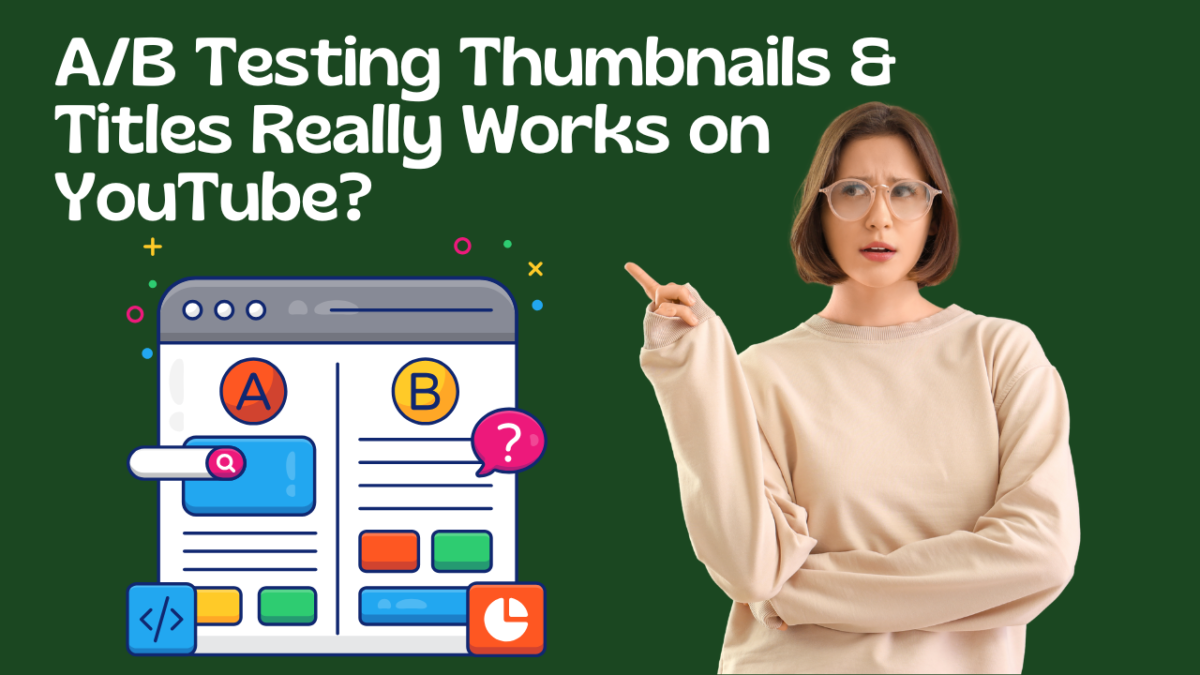
Does A/B Testing Thumbnails & Titles Actually Improve YouTube Views?

On YouTube, most videos don’t fail because the content is bad; they fail because the packaging doesn’t invite the click. Thumbnails and titles are the first filter every video passes through, and in a crowded feed, even a small advantage can decide whether a video gets discovered or ignored. This is where A/B testing enters the conversation. Not as a growth hack, and certainly not as a guarantee, but as a way to make smarter, calmer decisions in a platform driven by audience behavior. From an MCN perspective, A/B testing is less about experimentation for the sake of it and more about removing personal bias from content decisions.

Why A/B Testing Matters More Than Ever

As YouTube matures, the algorithm has become far more responsive to viewer signals than creator intent. It doesn’t care which thumbnail you like more; it reacts to what people actually click on and continue watching. A/B testing allows creators to understand how audiences respond to different visual or textual cues. Sometimes the difference is subtle: a facial expression, a word choice, a colour contrast. But at scale, even a small uplift in click-through rate can significantly improve reach, especially for evergreen or long-tail content. For channels publishing consistently, A/B testing helps answer a crucial question: Is my video underperforming because of content or because of presentation?

When A/B Testing Makes Sense and When It Doesn’t

A/B testing works best when the fundamentals are already in place. If a channel has a clear niche, stable content quality, and regular impressions, testing thumbnails and titles can unlock incremental growth. Where creators often go wrong is using testing as a reactionary tool. If a topic itself lacks demaAnd or clarity, no amount of thumbnail experimentation will save it. Similarly, channels with very low impressions rarely generate enough data for meaningful conclusions, making the test more misleading than helpful. From an MCN standpoint, the biggest mistake we see is creators changing thumbnails too frequently or testing multiple ideas at once. That creates noise, not insight.

How YouTube’s Testing Actually Works

YouTube’s built-in testing allows creators to upload multiple thumbnails for the same video. These variants are shown to similar viewer segments over time, and YouTube evaluates how audiences respond. What’s important to understand is that YouTube isn’t only measuring clicks. It also looks at what happens after the click, whether viewers continue watching or drop off quickly. A thumbnail that attracts curiosity but disappoints in delivery may perform well briefly but lose out in the long run. This is why some thumbnails that feel “less exciting” can outperform flashy ones over time. They set more accurate expectations.

Evaluating Results the Right Way

One of the most common misconceptions is judging a test too quickly. Early performance spikes are often driven by novelty, not preference. A meaningful result shows consistency improved click-through rate without hurting watch time, stronger performance across Browse and Suggested, and stability over several days. In some cases, a variant with slightly lower CTR but better retention becomes the true winner. A/B testing isn’t about instant wins. It’s about long-term efficiency.

Is A/B Testing a Must for Every Creator?

Not necessarily. Great storytelling and strong topic selection will always matter more than optimisation. A/B testing doesn’t replace creative instinct it refines it. Used correctly, it saves time, reduces emotional decision-making, and builds clarity around what your audience actually responds to. Used blindly, it becomes just another dashboard to obsess over

The Bigger Picture

A/B testing thumbnails and titles is not about chasing the algorithm. It’s about respecting audience behaviour and letting data guide packaging choices, especially when growth plateaus or becomes unpredictable. For creators serious about longevity, optimisation is no longer optional. But it has to be done with intent.

Want to Do This the Right Way?

At PING MCN, we help creators and publishers go beyond random testing. From deciding when to test, what to test, and when to lock winning patterns, our approach focuses on sustainable growth and not short-term spikes. If you’re looking to improve discovery, Reach, CTR, and long-term channel performance without guesswork, reach out to PING MCN to build a smarter strategy.

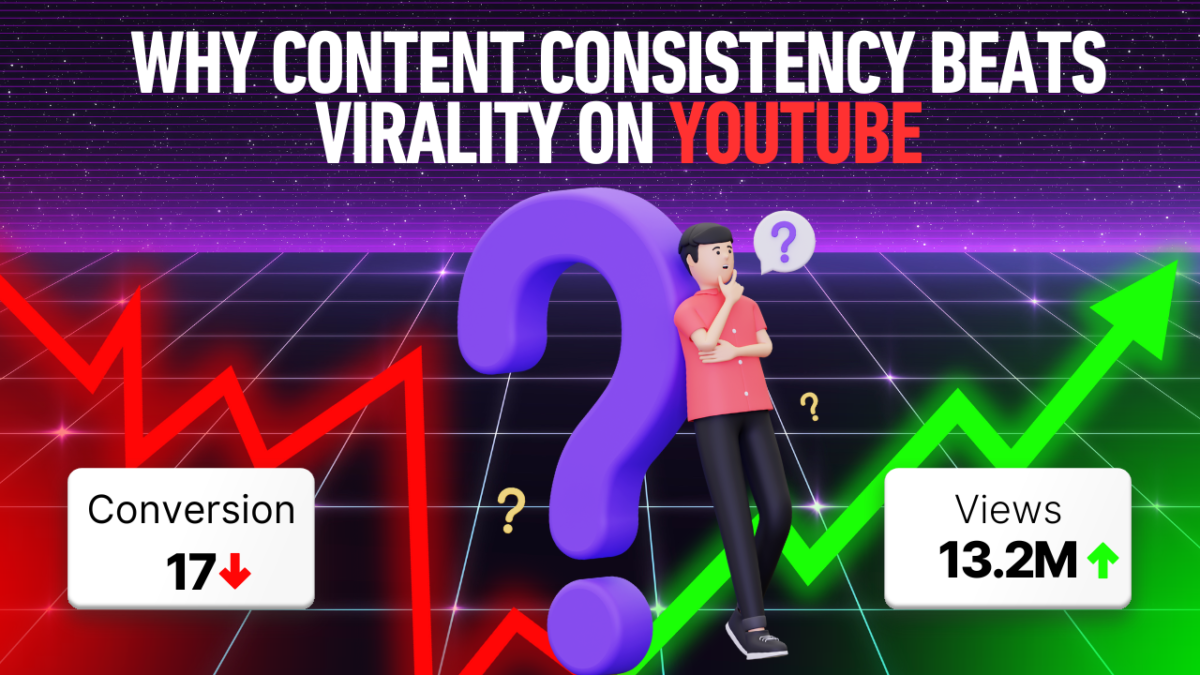
Virality vs Consistency on YouTube: What Really Drives Growth in 2026

For a long time, virality was widely seen as the fastest and most desirable route to success on YouTube. One explosive video could bring millions of views, a flood of subscribers, media attention, and the feeling of having “made it” overnight. This belief shaped how many creators approached content — constantly chasing trends, formats, or moments that might trigger the algorithm. However, as the platform has matured and the creator economy has professionalised, the reality in 2026 looks far more grounded. Today, sustainable success on YouTube is less about one-off spikes and more about long-term performance. Sudden viral moments may still happen, but they no longer guarantee lasting growth, stable income, or audience loyalty on their own.

In 2026, YouTube rewards creators who can deliver value repeatedly, week after week, video after video. Growth now comes from consistent watch time, returning viewers, and predictable engagement patterns rather than unpredictable bursts of attention. As a result, the creators who truly win are not those chasing every new trend, but those who build dependable content systems. clear formats, defined topics, and reliable publishing rhythms that compound steadily over time.

Virality Is Exciting, But It’s Unreliable

Viral videos often depend on timing, external shares, algorithm experiments, or sudden audience behaviour — most of which creators cannot fully control. Even high-quality videos can fail to go viral, while average ones sometimes explode unexpectedly. Consistency, however, puts creators back in control. When you publish regularly, focus on clear topics, and maintain a familiar format, you reduce dependency on luck. Over time, this steady output trains both the audience and the algorithm to expect and reward your content.

Consistency Builds Habit, Not Just Reach

Virality introduces you to people once. Consistency turns viewers into a community.
When audiences know what to expect, a weekly upload, a familiar format, and a clear value proposition, your content becomes part of their routine. This habit-driven viewing improves click-through rates, watch time, and engagement across every new upload. Over time, your channel develops memory value, not just momentary attention.

Monetisation Rewards Stability

From a revenue perspective, consistency is far more valuable than one-off success. Advertisers, brands, and platform-led monetisation features all prefer predictable performance. Channels that deliver stable monthly views, defined audience demographics, and regular uploads are easier to monetise and scale. Viral spikes often look impressive on analytics graphs but are difficult to convert into long-term income. Consistent channels, however, build reliable revenue streams across ads, brand deals, memberships, and commerce integrations.

The Compounding Effect of Consistent Content

Each consistent upload strengthens your channel ecosystem. Your video library grows, your authority in a topic deepens, and your content begins to recommend itself through playlists and suggested videos. One viral hit creates a moment. A hundred well-performing videos create a business. Over time, consistency compounds quietly — improving discoverability, retention, and channel credibility without dramatic spikes.

Why Virality Alone Can Hurt Creators

Going viral without a content foundation often creates pressure rather than progress. Creators may feel forced to repeat the same viral formula, chase trends outside their niche, or cater to an audience that doesn’t align with their long-term goals. Consistency encourages structure before scale. It allows creators to experiment safely, refine formats, and grow without burning out or confusing their audience.

The Real 2026 Strategy: Consistency First, Virality Second

The most successful creators in 2026 don’t ignore virality — they just don’t depend on it. They focus on consistent publishing, strong content pillars, and gradual improvement. When a video breaks out, it does so on top of a stable foundation, amplifying growth instead of distorting it.

Final Takeaway

In 2026, YouTube’s success is no longer about chasing the biggest spike. It’s about building a steady upward curve that lasts. Creators who commit to consistency gain audience trust, algorithm confidence, and monetisation stability. Virality may come and go, but consistency is what builds long-term creator careers.

At PING MCN, we help creators design these systems, balancing creative freedom with structured growth strategies that work with YouTube’s evolving ecosystem, not against it. If you’re looking to move beyond chasing virality and build consistent, long-term growth, reach out to the PING Network team and explore how our MCN expertise can support your channel at every stage.

YouTube Introduces Ask Studio: Your AI-Powered Creator Companion

YouTube has rolled out a major new feature within YouTube Studio called Ask Studio, an AI-powered conversational assistant that helps creators make sense of their analytics, audience insights, and content strategy — all through natural language prompts. Instead of endlessly navigating dashboards and scanning comments, creators can now just ask and get clear, personalised answers.

What is YouTube Ask Studio?

Ask Studio is an AI chatbot built right into YouTube Studio that creators can use to quickly understand their channel data and audience behaviour. It’s designed to act like a creative partner — someone you can ask questions to about your performance, community feedback, and future content opportunities. With Ask Studio, creators don’t need to interpret charts or sift through comments manually. Instead, they can use plain English to ask questions such as:


  • “How did my latest video perform compared to last month?”
  • “What are viewers saying about my content?”
  • “Give me ideas for my next video topic

Key Features and Capabilities

Here’s what Ask Studio brings to the creator workflow:

1. Conversational Analytics Interpretation
Ask Studio pulls analytics directly from your YouTube Studio data to explain performance in plain language — turning complicated charts and numbers into insights you can act on.
For example, you can ask how your view trend compares over time or why a particular video may have dropped in engagement.

2. Comment and Audience Summaries
One of the most powerful features is summarising comments at scale. Ask Studio can surface common themes, sentiment trends, or recurring viewer questions without you having to read each comment manually.

3. Content Inspiration & Strategy
Beyond analysis, Ask Studio can suggest new video ideas, hooks, and potential formats based on what your audience already responds to. If you’re stuck on what to create next, this is like having a brainstorming partner built into Studio.

4. Personalised Insights
Since the AI uses your specific channel data, every answer is tailored — not generic. It can highlight which videos earned the most subscribers, which topics keep viewers watching longest, and where your growth opportunities lie.

Limitations to Keep in Mind

While promising, Ask Studio isn’t perfect yet:
🔹 Limited Access: Still in experimental rollout, not everyone sees it yet.
🔹 Desktop Only: Mobile Studio users can’t use it yet.
🔹 Not a Replacement for Deep Analytics: It simplifies insights, but shouldn’t replace strong data review or strategy skills
🔹 Accuracy Varies: As with all AI tools, some answers may need refinement or rephrasing to get the best responses.

Where Ask Studio Helps And Where Human Expertise Still Matters

Ask Studio is a powerful step toward making YouTube analytics easier and faster to understand. It helps creators see what is happening on their channel and what their audience is responding to. However, growth on YouTube still depends on correct interpretation, policy awareness, and long-term monetisation strategy, areas where AI insights alone can fall short. Ask Studio simplifies data, but it doesn’t account for copyright risk, monetisation health, or platform-level nuances that impact a channel over time. That’s why creators who scale sustainably combine AI tools like Ask Studio with experienced guidance. At Ping MCN, we help creators turn insights into safe, actionable strategies, ensuring growth that is not just faster, but also stable and compliant.

AI shows the numbers. Experience shows the direction. Reach out to Ping MCN if you’re looking for expert support beyond dashboards and want a Content growth strategy, monetisation, or rights-related support.

All the Revenue Streams Available for YouTubers And How to Use Them in 2026

In 2026, YouTube is no longer a platform where creators simply upload videos and wait for ads to pay the bills. It has evolved into a complete media and commerce ecosystem. For creators who understand this shift, YouTube is not just a distribution channel — it is the front end of a business. What separates struggling creators from sustainable ones today is not talent or consistency alone, but how well they understand and combine YouTube’s multiple revenue streams. Here we have explained every major way YouTubers can earn in 2026, and more importantly, how each stream should be used strategically.

Ad Revenue: The Foundation, Not the Finish Line

Ad revenue through the YouTube Partner Program remains the most common and visible form of monetisation. When ads are served on a video, creators earn a share of the revenue based on factors such as viewer location, content category, watch time, and advertiser demand. However, by 2026, most experienced creators understand one hard truth: ad revenue is unstable. CPMs fluctuate with seasons, markets, and even global events. A channel that earns well one month can see revenue drop the next without any fault of its own. This is why ad revenue should be treated as the foundation layer. It rewards scale and consistency, but it should not be the only income source a creator depends on. Smart creators optimise retention, pacing, and viewer experience not just to increase earnings, but to make their content attractive for other monetisation layers built on top of it.

Fan Funding: Turning Viewers into Supporters

One of the biggest shifts in the creator economy is the move from advertiser-dependent income to audience-supported income. Features like Channel Memberships, Super Thanks, and live monetisation allow creators to earn directly from their most loyal viewers.

In 2026, fan funding works best for creators who build communities rather than chase viral reach. Educational channels, podcasts, gaming creators, and niche experts benefit the most because viewers feel personally invested in the creator’s work. The key here is value. Viewers do not pay simply to support a channel; they pay for access, recognition, and exclusivity. When done right, even a small group of engaged supporters can create a stable, recurring monthly income that is far more predictable than ads.

Affiliate Marketing: Monetising Intent, Not Attention

Affiliate marketing has quietly become one of the most effective monetisation methods on YouTube. Instead of being paid for views, creators earn when viewers actually take action and buy a product. This works especially well in categories where viewers are already in a decision-making mindset, such as technology, beauty, home, fitness, and online tools. A well-timed recommendation in a helpful video can continue earning months or even years after upload.

In 2026, affiliate income is often combined with YouTube Shopping and product tagging, making the purchase journey shorter and more seamless. For creators, the focus should be on solving problems rather than pushing products. Trust drives conversions far more than aggressive promotion.

YouTube Shopping: Content Meets Commerce

YouTube’s evolution into a shopping platform has changed how creators think about monetisation. Product tagging allows creators to link items directly within videos, Shorts, and live streams, turning content into a storefront.

This is particularly powerful for creators who may not yet have brand deals but create content that naturally demonstrates products. Cooking channels, tech reviewers, lifestyle creators, and educators benefit greatly because viewers can move from discovery to purchase without leaving the platform.

In 2026, YouTube Shopping is less about selling and more about enabling. When creators use it as a utility rather than a sales pitch, it enhances viewer experience while generating revenue.

Selling Your Own Products and Services

For many established creators, YouTube is no longer the primary source of income. It is the engine that drives traffic to what they own. Courses, consultations, digital products, workshops, and communities allow creators to monetise expertise directly. Unlike ads or brand deals, this revenue is fully controlled by the creator, from pricing to positioning. The most important shift here is mindset. Successful creators don’t treat YouTube as a place to sell aggressively. They use it to educate, build trust, and demonstrate credibility. Sales become a natural extension of the value already delivered for free. In 2026, creators who own products own their future.

Content Licensing and Rights Monetisation

Another often overlooked revenue stream is content licensing. High-quality, original, or newsworthy content can be licensed to media houses, platforms, and brands for reuse. Additionally, creators who own music, video libraries, or original IP can monetise usage across YouTube through rights management systems like Content ID. This allows creators to earn even when they are not the ones uploading the content. This form of monetisation works best for production houses, music creators, and media-first channels. While it requires strong rights documentation and responsible usage, it creates long-term passive income from existing content.

Pay-Per-View and Premium Access

YouTube’s paid content features allow creators to charge viewers directly for exclusive access. This model works best for premium experiences such as workshops, films, special interviews, or live events. In 2026, successful creators avoid locking their regular content behind paywalls. Instead, they use paid access as an upgrade for viewers who want deeper value or exclusive experiences. When positioned correctly, premium content enhances a creator’s brand rather than limiting reach.

The Real Monetisation Lesson for 2026

The biggest mistake creators make is chasing every monetisation option at once. The smartest creators choose a combination that fits their content, audience, and long-term goals.

  • Ad revenue brings scale.
  •  Fan funding brings stability.
  •  Brand deals bring growth capital.
  •  Products and affiliates bring profitability.
  •  Rights monetisation brings long-term value.

In 2026, YouTube’s success is no longer measured by views alone. It is measured by how well a creator turns attention into a sustainable business. Creators who understand this shift early won’t just survive the next wave of change; they’ll lead it. YouTube monetisation in 2026 isn’t about chasing every feature; it’s about using the right tools at the right time.

As the best MCN In India, we at Ping Network help creators and content owners turn YouTube into a structured, scalable business through monetisation strategy, rights management, and platform expertise. If you’re building for the long term, conversations matter more than shortcuts.

PING NETWORK WHITE

Drop Your Email & Stay in the Loop